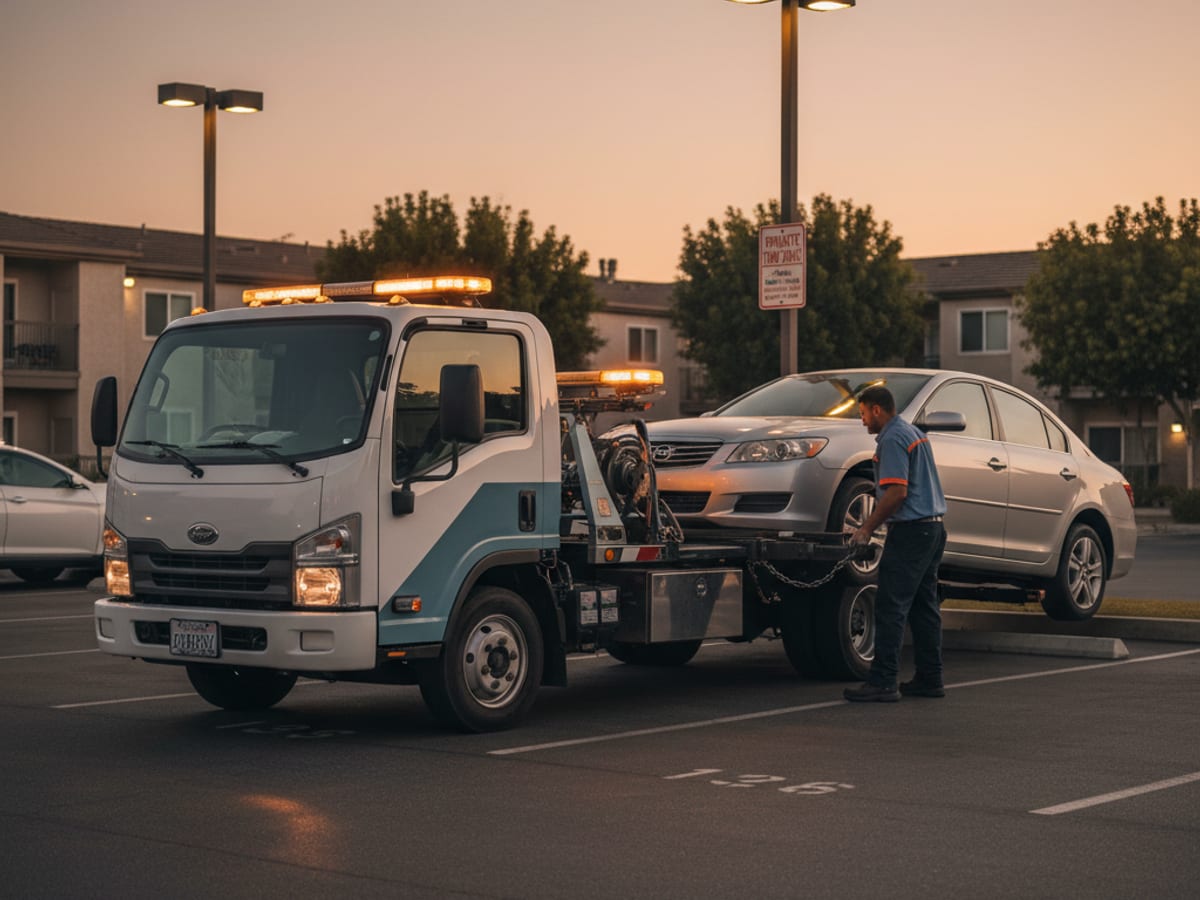
If a car blocks your driveway in Houston, do not move or tow it yourself. The path is a private-property tow under Texas Occupations Code §2308.301, and you hire a TDLR-licensed Private Property (PP) operator to do it. The signage rule still applies, the operator verifies compliance before the tow, and the operator’s TDLR license must be visible.
What “private-property tow” means in this context
A private-property tow happens when the vehicle owner has not authorized the vehicle to be on the lot, and the property owner (you, the homeowner) has hired a licensed operator to remove it. The legal framework is Occ. Code Ch. 2308. The operator must be licensed by TDLR as a Private Property operator.
A driveway that you own and that is being blocked by an unauthorized vehicle is a private-property tow situation. The operator you hire handles the paperwork and the actual tow.
What the operator checks before towing
The operator verifies:
- The lot (your driveway and curb in front of it) has compliant signage under §2308.301: at least 18 by 24 inches, mounted 5 to 8 feet high, with the international tow symbol, the parking prohibition, enforcement days/hours, and a 24-hour phone with area code
- The signage is at each entrance (or every 25 feet along a wider entrance)
- The operator’s TDLR license is current and visible on the truck
If your driveway lacks the signs, the operator may decline the tow. Without compliant signs, the tow can be challenged at the hearing (Occ. Code §§2308.452, 2308.456), and you would not get the fees back even if the car was blocking you.
What to do before you call the operator
- Photograph the car blocking your driveway with a timestamp
- Note the make, model, color, and license plate
- Note any hazards (is the car leaking fluid, is it occupied, is it on a jack or blocks)
- Check whether the car is blocking emergency access or a fire hydrant (those are towable without notice under different rules)
The operator may ask for the photo and notes when they arrive. Keep them on your phone for the hearing, if one is requested.
What to do while you wait for the operator
- Do not block the car in with your own car. That creates a different problem and does not give you any legal right to remove the vehicle.
- Do not key the car, slash the tires, or otherwise damage it. That is criminal damage and can make you liable.
- Do not call a non-TDLR-licensed “buddy with a truck.” The tow is illegal without the license, and the operator cannot legally store the vehicle at a non-VSF location.
- If the car appears abandoned, contact HPD non-emergency at (713) 884-3131 for guidance. An abandoned-vehicle path is different from a private-property tow.
How to hire the operator
Call a TDLR-licensed PP operator. Quick Tow Houston can dispatch one across the metro at (281) 916-1288. You can also verify any operator’s license at the TDLR license search.
When the operator arrives, they:
- Verify the signs on your property
- Photograph the signs (for their records)
- Photograph the vehicle’s location (for their records)
- Photograph the vehicle’s condition (for their records)
- Hook and remove the vehicle
What the operator charges
For a private-property tow in the Houston metro, the operator’s fee is typically a quote (consent tow from your perspective as the hiring party). The operator confirms the price on the call before the truck rolls. Storage at the VSF runs $22.85 per day for vehicles up to 25 ft, plus an impoundment fee of up to $20 and a notification fee of up to $50.
You are hiring the operator, so the fee is between you and them. The driver of the blocking car pays storage and VSF fees; you pay the operator’s tow fee.
What about the driver of the blocking car
The driver of the blocking car has the same rights as any towed driver: the right to a hearing within 14 days under §§2308.452, 2308.456, and the right to retrieve personal property without an access fee. The driver also has the right to dispute the tow on the basis of non-compliant signs.
If the signs were compliant, the tow usually stands. If the signs were not compliant, the driver may win the hearing and recover fees.
What if the car is occupied
If a person is in the blocking car, do not engage. Call HPD non-emergency at (713) 884-3131. Police can de-escalate and determine whether the situation is criminal (trespass, harassment) or civil (private-property tow).
When this is not the right path
A private-property tow is for unauthorized parking on private property. It is not the right path if:
- The car is on a public street blocking your driveway entrance curb. That is a public-street obstruction and the city’s job.
- The car is parked legally in a spot you think is yours. The property manager or HOA handles that, not you.
- The car is on a neighbor’s property and you want it gone. The neighbor hires the operator; you do not.
For a city-street obstruction, contact 311 (Houston’s non-emergency city services) or HPD non-emergency. For a tenant or apartment resident’s situation, see our parking spot guide. For a private-property owner’s full procedure, see our property owner guide.
If you need to hire a PP operator now, call (281) 916-1288. The line takes calls around the clock.
Frequently asked questions
Can I move a car blocking my driveway in Houston? No. You cannot move or tow the car yourself. Hire a TDLR-licensed Private Property operator.
Do I need signs on my driveway to tow a blocking car? Yes, if the operator will rely on the private-property tow path. Without compliant signs under §2308.301, the tow is challengeable and you may not recover your fee.
How much does a private-property tow cost? The operator quotes a fee on the call. Storage at the VSF runs $22.85 per day for vehicles up to 25 ft, plus a TDLR-capped impoundment fee of up to $20 and notification fee of up to $50.
What if the car is occupied? Call HPD non-emergency at (713) 884-3131. Do not engage.
What if I just want the car gone today? A private-property tow is the path. Call a TDLR-licensed PP operator and verify the signs on your property before they arrive.
What if the car is on a public street blocking my curb? That is a city obstruction. Contact 311 or HPD non-emergency. The private-property tow path does not apply.