A flat tire can call for roadside help, towing, or either option. If you’re searching for flat tire service near me, start with your location, spare tire, and visible wheel damage. Dispatch can use those details to connect you with an appropriate operator.
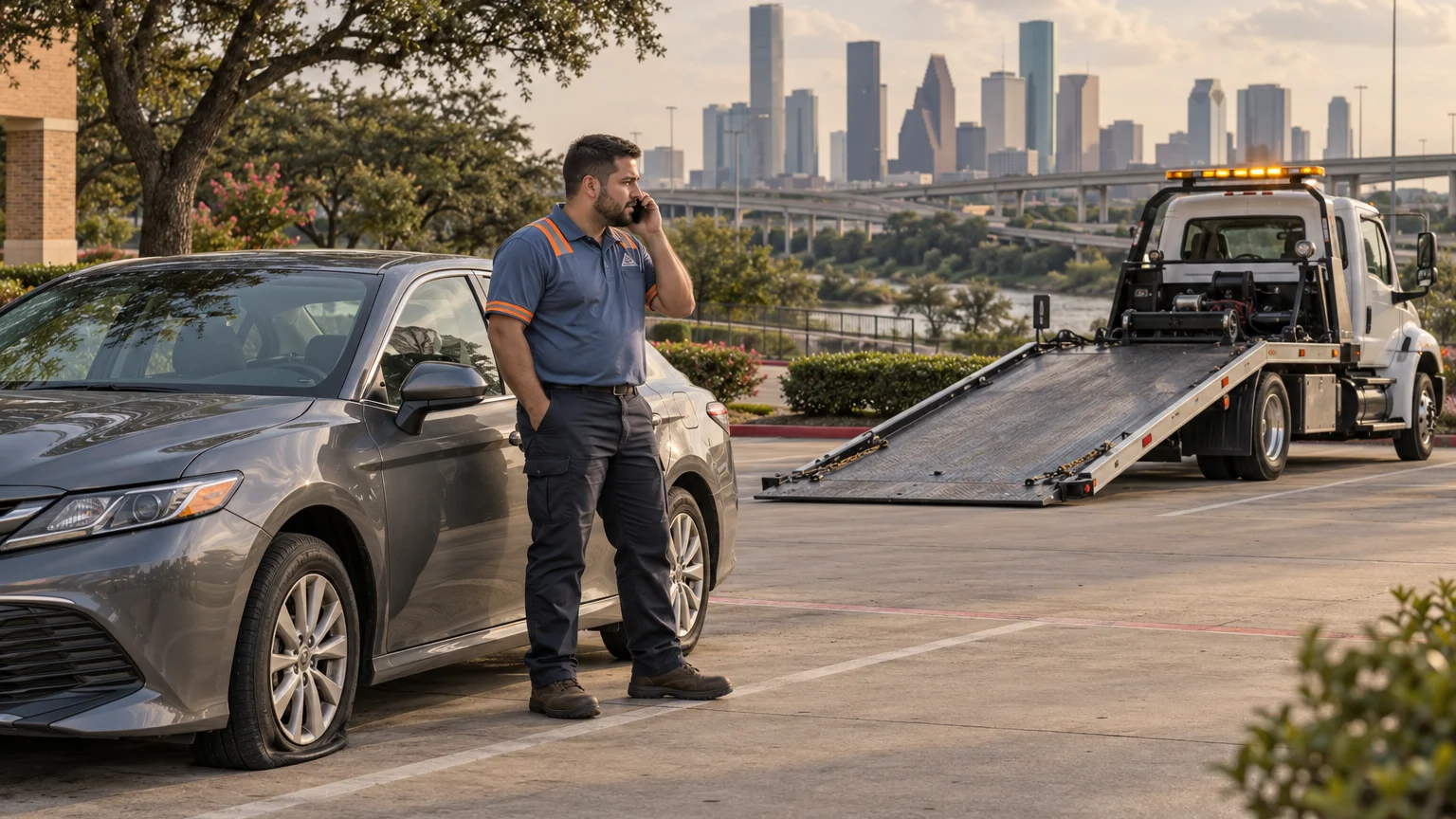
When roadside tire help may be enough
Roadside help may fit when the vehicle is already in a safe location. A driveway, parking garage, or shopping center lot gives the operator useful context. Tell dispatch whether the ground is level and whether traffic passes beside the vehicle.
A working spare may also change the answer. Check whether the spare is present without entering moving traffic or crawling beneath the vehicle. Tell dispatch if it looks flat, damaged, or unfamiliar. The operator can decide whether a roadside tire change is suitable.
Some vehicles carry a temporary spare. Others may have no spare at all. Don’t guess what your vehicle includes. Check the owner’s manual or ask the vehicle manufacturer. The operator also needs the vehicle’s year, make, and model before heading out.
Roadside help doesn’t always mean the damaged tire can be repaired. That decision belongs to a tire professional after inspection. Describe what you can see, but don’t diagnose a puncture, sidewall, or wheel over the phone.
Our flat tire service page explains how dispatch handles these calls. Broader roadside assistance may also fit when the problem isn’t clearly limited to the tire.
The operator sets the service price. Ask what service is being quoted and what could change it. Confirm the amount directly with the operator before dispatch.
When the vehicle may need a tow
A tow may make more sense when no usable spare is available. It may also be needed when the operator can’t complete the work at your location. Dispatch won’t promise that a roadside visit can prevent towing.
Visible wheel damage matters. Tell dispatch if the wheel looks bent, cracked, or displaced. Mention any contact with a curb, pothole, or road debris. Don’t drive the vehicle merely to test whether the damage is serious.
Report other changes noticed when the tire failed. That could include unusual steering, a warning displayed by the vehicle, or fluid beneath the car. These details help the operator choose how to approach the call. They don’t replace an inspection.
The vehicle itself matters too. Give the full model and describe any modifications you know about. If the manufacturer specifies a towing method, share that information. When you aren’t sure, consult the owner’s manual or manufacturer before transport.
A damaged wheel, low-clearance vehicle, or manufacturer instruction may affect the towing method. The operator must confirm what equipment fits the vehicle. Our guide to when a flatbed tow may be appropriate explains the questions worth asking.
Houston trips can cross several road systems and jurisdictions. A vehicle near Downtown, Pasadena, or Katy may have very different access conditions. Give the exact location before choosing a destination.
Freeway shoulders, missing spares, and damaged wheels
A flat on I-45 isn’t the same as one in a Gulfton parking lot. Moving traffic, narrow shoulders, ramps, and barriers can limit roadside work. I-10 near Beltway 8 can also leave little room for a driver to assess damage.
Don’t attempt a tire change in an exposed traffic lane. Texas law generally restricts stopping on the main traveled portion of a highway outside business or residential districts. Disabled vehicles are excepted, but the location still needs to be described accurately.
Share the freeway name, travel direction, nearest exit, and visible marker. Say whether you’re on the main lanes, a frontage road, or a ramp. A map pin helps, but it shouldn’t replace those details.
Houston’s Tow and Go program provides a no-cost tow of an attended disabled vehicle to a safe place off an eligible freeway, up to about one mile. It can also provide a flat-tire change when the vehicle has a working spare. The program excludes tollways and the Katy Freeway HOT lanes. Law enforcement or Houston TranStar must authorize the service.
Tow and Go doesn’t mean every Houston road is covered. Beltway 8 toll segments, local streets, private parking lots, and distant suburban roads require a different assessment. Tell dispatch precisely where the vehicle sits.
If there’s no spare, say so immediately. If the wheel struck debris or a deep pothole, mention that too. The operator can then determine whether roadside service remains possible or a tow is the better fit.
What to tell dispatch before an operator heads out
Good location details prevent confusion across Houston’s overlapping road network. Start with the street or freeway, direction of travel, and nearest cross street. Add the business name, garage level, gate instructions, or entrance when relevant.
Then describe the vehicle:
- Year, make, and model
- Car, pickup, SUV, motorcycle, or another vehicle type
- Which tire is affected
- Whether a spare is present
- Whether the spare appears usable
- Any visible wheel or body damage
- Any warning shown by the vehicle
- Whether the vehicle is in traffic or behind a barrier
- Your intended destination if towing may be needed
Mention access problems early. A low garage ceiling, locked gate, tight parking row, or soft roadside shoulder can affect the operator’s approach. Don’t assume every truck can enter every garage or loading area.
Be honest about what you don’t know. “I can’t see the tire safely” is useful information. Dispatch doesn’t need you to step toward traffic for a closer look.
Quick Tow Houston is a referral and dispatch service. We connect callers with licensed, insured towing operators. Texas requires tow operators to hold the appropriate TDLR license, which can be checked through the TDLR towing consumer information page.
Before the operator heads out, ask for an arrival estimate. Also ask the operator to explain the quoted service and price. Availability, timing, and price depend on the operator handling the call.
Choosing a tire shop or another destination
If towing is needed, choose the destination before the vehicle moves. A nearby tire shop may be logical when the issue appears limited to the tire. A dealership or repair shop may fit when there’s wheel, suspension, steering, or other vehicle damage.
Call the destination first. Confirm that it accepts the vehicle and can address the problem you described. Ask where a tow operator should leave the vehicle. Don’t assume an after-hours drop is available.
Location changes the practical choice. From the Energy Corridor, a familiar shop across town may mean a longer tow along I-10. In Pasadena or the East End, crossing the Ship Channel area can add distance. A breakdown near the Bay Area may put your preferred dealership far north of the vehicle.
Distance isn’t the only consideration. Confirm the shop works on your vehicle and tire type. Ask whether it needs the keys and whether someone must sign at arrival. Those policies come from the destination, so verify them directly.
Our guide to choosing a dealership or repair shop for a Houston tow covers that decision in more detail. Dispatch can route the call, but the customer contracts directly with the operator. The shop separately controls its own inspection, repair decisions, and charges.
If you haven’t selected a destination, say so before dispatch. The operator can’t decide which repair facility best fits your warranty, vehicle, or service history. A short call to the shop can prevent a second move.
When to call us
Call when there’s no usable spare, roadside work may not fit, or the vehicle needs transport to a shop. Quick Tow Houston will connect you with a licensed, insured operator who can assess the call and confirm the service details.
Call us at (281) 916-1288 and we’ll connect you with an operator who handles this work.