A disabled pickup needs more than a pin dropped on a map. When you search for a truck towing service near me, share the pickup’s condition, location, cargo, and destination before dispatch. Those details help us connect you with a licensed, insured operator prepared for the request.
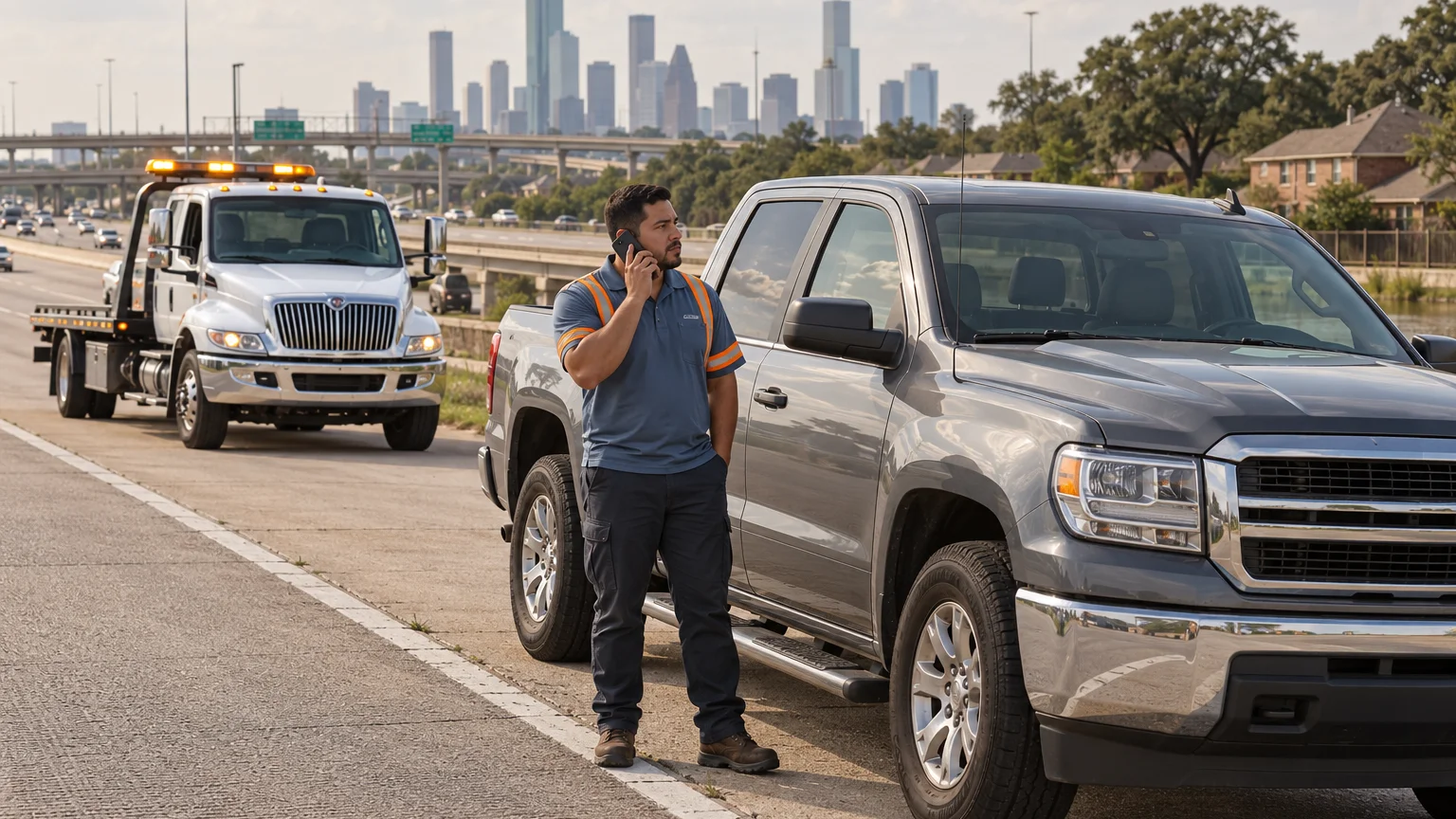
Describe the pickup and what stopped working
Start with the pickup’s year, make, model, and configuration. Don’t stop at saying it’s a Ford, Chevrolet, Ram, Toyota, or Nissan. The operator needs enough information to identify the vehicle before choosing equipment.
Tell dispatch whether it’s a standard pickup or a modified truck. Mention changes such as a lift, lowered suspension, oversized tires, or added equipment. Don’t guess its weight or clearance. Share the specifications you have and let the operator evaluate them. The owner’s manual or manufacturer information may provide details if you’re unsure.
Next, describe what happened. Say whether the engine stopped, the truck won’t start, or a wheel appears damaged. Mention visible fluid, collision damage, or parts touching the pavement. Don’t crawl beneath the pickup to investigate on a freeway shoulder.
Be clear about the truck’s current position. Tell dispatch if the wheels are straight, turned, locked, or visibly damaged. Say whether the keys are available. If the pickup can’t shift, steer, or roll, report that without trying to force it.
A pickup truck towing Houston request isn’t automatically heavy-duty work. Pickup sizes, configurations, cargo, and conditions vary. The operator should make that classification after reviewing the vehicle details.
If you’re stranded and professional transport is needed, our emergency towing referral service can connect you with a local operator. The customer contracts directly with that operator. Confirm the proposed equipment and price with them before dispatch.
Share its location, access, and destination
A map pin helps, but Houston access details matter just as much. Give the road name, travel direction, nearest exit, and a visible landmark. On Beltway 8, specify whether you’re on the main lanes, a frontage road, or inside a parking area. Those are different access situations.
On US-59, include your direction of travel and the last exit passed. Houston drivers may also call this route I-69 or the Southwest Freeway, depending on the area. Share whatever name appears on the nearest sign.
Describe the pickup’s exact position. It might be in a garage, behind a gate, beside a loading dock, or on soft ground. Mention narrow entrances, low structures, locked access points, and anything blocking a direct approach. Don’t promise that equipment will fit. The operator must assess access using the details you provide.
Choose a destination before calling when possible. You might want a repair shop, dealership, home, or another approved property. Confirm that the destination expects the truck and can receive it. Quick Tow Houston doesn’t operate a storage yard or impound lot.
Distance can change that choice. A breakdown west of the Energy Corridor may place you far from a preferred shop in central Houston. A pickup near Baytown may be closer to a shop familiar with the owner’s needs than one across the metro. Our guide to choosing a dealership or repair shop in Houston can help you decide.
If the pickup is stopped on a Houston freeway, Tow and Go may provide a no-cost tow to a safe location off the freeway, up to about one mile. The program excludes tollways and Katy Freeway HOT lanes. The vehicle must be attended, and law enforcement or Houston TranStar must authorize the tow.
Tell dispatch about cargo or attached equipment
A pickup’s bed may look ordinary from outside while carrying heavy or unsecured items. Tell dispatch what’s in it. Include toolboxes, building materials, machinery, tanks, loose debris, or other cargo. Don’t estimate a weight unless you have a reliable figure.
Mention anything mounted to the truck. That includes racks, bed covers, campers, service bodies, plows, cranes, or equipment extending past the tailgate. Share manufacturer specifications when they’re available. Photos can also help the operator understand the setup, but they don’t replace an on-site assessment.
Tell dispatch about anything attached behind the pickup. A trailer, boat, equipment hauler, or other connected unit creates a different request. Provide separate details for the pickup and attachment. Don’t assume one operator or one towing vehicle can transport both. Ask how the operator plans to handle each unit.
Loose cargo deserves attention before movement. Don’t climb into a traffic-facing bed or stand where passing vehicles could reach you. From a safe location, tell the operator what appears loose, damaged, or shifted. Let the arriving professional decide what must happen before transport.
Also mention leaking containers, damaged batteries, or unusual odors. Describe what you can observe without touching or moving the material. If there’s fire, smoke, an injury, or an immediate danger to traffic, contact emergency services first.
These details help dispatch avoid treating every pickup as the same job. They also give the operator a clearer basis for selecting equipment. Ask the operator what information is still needed before the truck rolls.
Confirm the towing method with the operator
Don’t choose a towing method from the pickup’s appearance alone. The operator needs to consider the vehicle specifications, condition, modifications, cargo, and manufacturer instructions. Ask which method they propose and why it fits your truck.
A flatbed towing operator may be considered for some pickup requests. A wheel-lift towing operator may be considered for others. Those service names don’t guarantee that either method suits your specific pickup. The operator must confirm compatibility.
Share the drivetrain information if you know it. Don’t guess. The owner’s manual, vehicle information, or manufacturer guidance may explain transport requirements for your exact configuration. Tell the operator if you can’t confirm the answer.
Before dispatch, cover these points with the operator:
- The exact pickup and configuration
- Visible damage and which wheels can move
- Modifications, cargo, and attached equipment
- The pickup’s location and access limits
- The intended destination
- The proposed transport method
- The operator’s price and payment terms
Quick Tow Houston doesn’t set the towing price. The operator provides it, and the customer contracts with that operator. Ask whether the quoted scope includes the complete request you described. If the situation changes after arrival, ask the operator to explain any revised work before proceeding.
Texas requires tow operators to hold a TDLR license. You can review state towing information through the Texas Department of Licensing and Regulation. Ask the operator for identifying information if you want to verify the license before service.
Stay focused on your specific pickup. A method that worked for a neighbor’s stock truck may not fit a modified truck, damaged wheel, loaded bed, or attached trailer.
Houston routes that change the destination choice
Houston’s road network can make the destination as important as the pickup point. A nearby shop on a map may sit across a ship channel crossing, tollway, or congested freeway corridor. Choose based on the truck’s needs and the shop’s location, not distance alone.
On I-10 west of the Energy Corridor, confirm whether the destination is farther west toward Katy or back toward central Houston. Give the operator the full street address. Don’t rely on a shop name, since businesses can have several locations.
Beltway 8 circles a wide section of the metro. State the nearest intersecting highway and whether you’re on a toll segment or frontage road. A pickup near Beltway 8 and I-10 is a different routing request from one near Beltway 8 and US-59.
US-59 runs through several distinct parts of Houston. Direction and nearby exits help separate a southwest Houston breakdown from one northeast of downtown. If you’re unfamiliar with the area, read the nearest overhead sign from a safe position.
Industrial roads near Baytown require precise location notes. Share the facility entrance, public road, gate instructions, and any access contact you already have. Don’t tell an operator to enter restricted property without authorization. If the pickup is inside a worksite, confirm the site’s access process before dispatch.
A shop should also be ready for the vehicle. Confirm its address and receiving instructions yourself. If it’s closed or can’t accept the truck, choose another authorized destination with the operator. We don’t own a yard where the pickup can be held.
Houston spans long distances, and crossing the metro can change the service scope. Give the operator both addresses before agreeing to dispatch. Ask for an arrival estimate, proposed route, and price directly from that operator.
When to call us
Call when your pickup needs professional transport and the operator must assess its condition, cargo, access, or attached equipment. Call us at (281) 916-1288 and we’ll connect you with an operator who handles this work.