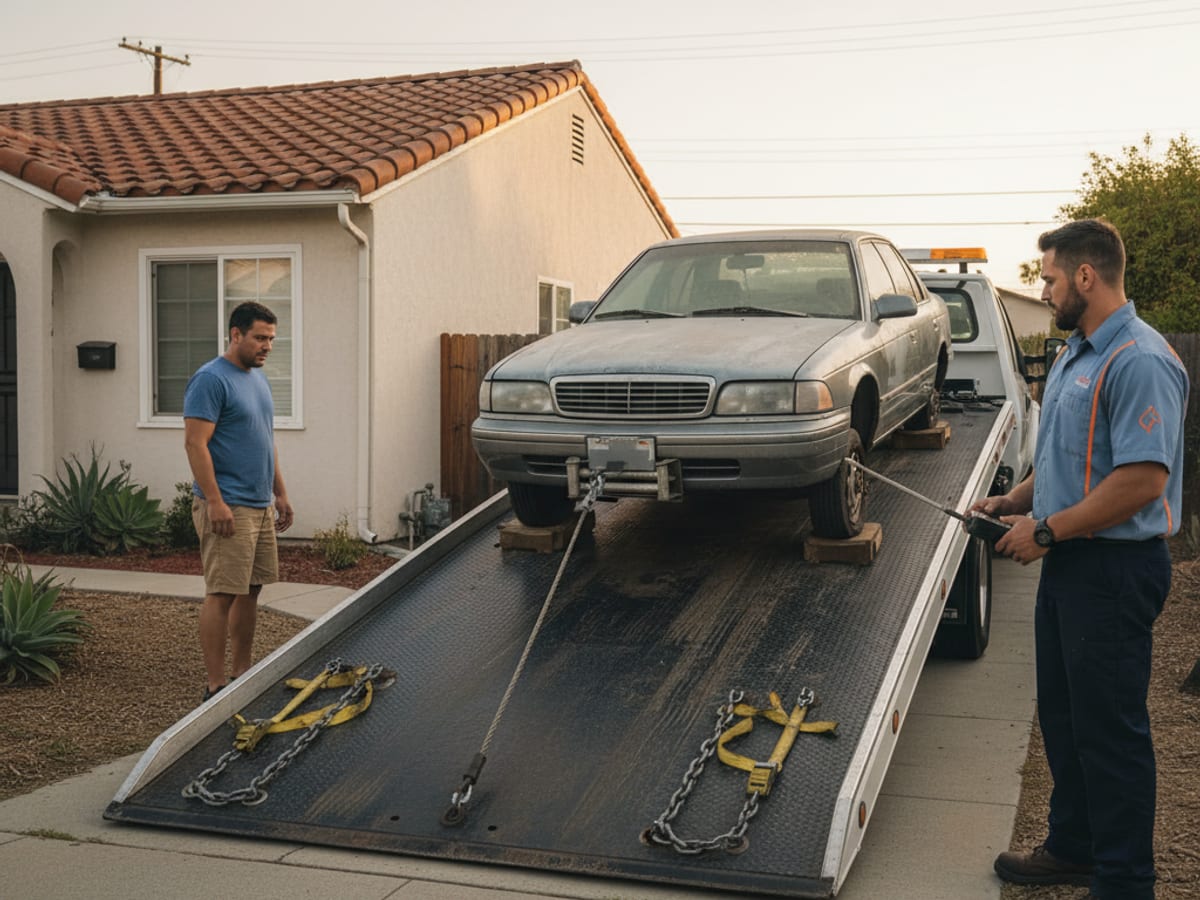
In Texas, a vehicle at a Vehicle Storage Facility (VSF) follows a defined path after the storage clock starts. Under Transportation Code Chapter 683, the vehicle is treated as abandoned after the 10th day following mailed notice. The VSF cannot charge more than 5 days of storage until it has mailed that notice. After the 10-day notice window, the yard’s path is a lien sale.
How the storage clock starts
Storage begins six hours after the vehicle arrives at the VSF (per 16 TAC §85.722). From that point:
- Day 1: storage charges begin (after the 6-hour grace)
- Days 1 to 5: the VSF can charge for storage, but it must mail owner notice before charging more than those 5 days
- Day 6 and beyond: the VSF cannot charge additional storage until it has actually mailed the notice
- Day 10 after mailed notice: the vehicle is treated as abandoned under Transp. Code §683
A part-day counts as a day for storage purposes, but not more than one day if under 12 hours.
The 5-day storage cap before notice
TDLR’s rule: no more than 5 days of storage can be charged until owner notice is mailed. The yard has to actually mail the notice (not just say it did) before charging additional storage.
What that means for you:
- If the yard waited 10 days to mail notice, you owe 5 days of storage, not 10
- If the yard never mailed notice, you owe 5 days of storage total
- If you can prove (through USPS tracking or a process server receipt) that notice was late, the extra storage may be reversed
The 10-day abandonment window
Once the yard mails owner notice (typically certified mail to the last known address and the lienholder), the vehicle is treated as abandoned if not picked up within 10 days after that notice. After the 10-day window:
- The yard can move toward a lien sale
- The yard must publish the sale in a local newspaper (the publication and timing rules are in Transp. Code Ch. 683)
- Personal property inside the vehicle is still your property until the lien sale closes
The lien sale path
A lien sale is the yard’s path to recover unpaid storage and towing fees. The yard:
- Sends the owner notice (per the 5-day and 10-day rules above)
- Publishes the sale in a newspaper of general circulation in the county
- Sells the vehicle at public or private sale, depending on the value
- Applies the proceeds to the unpaid fees
- May pursue the owner for any deficiency (the amount still owed after the sale)
The lien sale rules under Transp. Code Ch. 683 are specific. The yard has to follow them. If they skip a step (notice, publication, timing), the sale can be invalidated.
What you can still do during the 10-day window
Even after the 5-day mark, you can usually pick up the vehicle and pay only the charges allowed under TDLR rules:
- The tow fee (TDLR cap or city rate)
- The impoundment fee (up to $20)
- The notification fee ($50)
- Storage fees up to the cap described above
- No environmental fees, no notary fees, no personal property access fees
The yard cannot refuse to release the vehicle to the registered owner (or the owner’s authorized agent) who pays the lawful charges.
What about the personal property
Personal property in the vehicle (clothes, tools, child seat, documents) is yours through the lien sale. TDLR’s personal property access rule applies until the sale closes. The new owner takes title to the vehicle, including any items still inside, after the sale closes.
If you want to retrieve personal property before the lien sale, do it early. After the sale, the new owner controls the items.
How to stop the clock
The simplest way to stop the clock is to pick up the vehicle or arrange for someone with written authorization to do so. If you cannot pick up the vehicle yourself (out of town, no transportation, work conflict), a friend or family member with:
- A photo ID
- The tow receipt (or VSF storage invoice with your name)
- A signed authorization letter
- Payment for the lawful charges
can usually retrieve the vehicle on your behalf.
What to do if you think the charges are wrong
If the VSF charges more than 5 days of storage before mailing notice, or charges prohibited fees (environmental, notary, access):
- Note the dates and amounts
- Ask for the VSF’s mailing log or USPS tracking on the notice
- File a TDLR complaint
- Raise the overcharge at the tow hearing (within 14 days under Occ. Code §§2308.452, 2308.456)
The hearing is the cleanest way to get an adjudicated refund on overcharges. TDLR discipline is a slower path but stays on the operator’s record.
What to do before you let the clock run
If you cannot pick up the vehicle in the next few days, call the VSF and ask:
- The exact daily storage rate and the cap on chargeable days
- Whether owner notice has been mailed (and to what address)
- Whether a payment plan is offered (some VSFs accept partial payments to stop the clock)
- The TDLR license number of the operator
A short call can save you hundreds of dollars in extra storage and a lien sale on your record.
For help with the next steps, call Quick Tow Houston at (281) 916-1288. For your hearing rights, see our rights guide. For what to expect on price, see our tow cost guide.
Frequently asked questions
When is a vehicle abandoned under Texas law? A vehicle at a VSF is treated as abandoned under Transp. Code Ch. 683 after the 10th day following mailed owner notice.
How many days of storage can the VSF charge before mailing notice? No more than 5 days. The yard has to actually mail the notice before charging more.
Can the VSF charge me to access my personal property? No. TDLR prohibits access fees for personal property in a stored vehicle.
How long does the lien sale take? Transp. Code Ch. 683 specifies publication and timing rules. The timeline runs weeks, not days. Ask the VSF for the specific sale date.
What if I am out of town? A friend or family member with photo ID, written authorization, and payment can usually retrieve the vehicle. Call the VSF to confirm.
Can the VSF sell my car without mailing notice? No. Notice is a required step. If they skipped it, the sale can be invalidated and you can file a TDLR complaint.