Airport towing in Houston starts with one useful detail: your exact location. Around George Bush Intercontinental Airport, saying “I’m near IAH” leaves too much ground to search. Send a map pin, road name, direction of travel, and nearby landmark before dispatch begins.
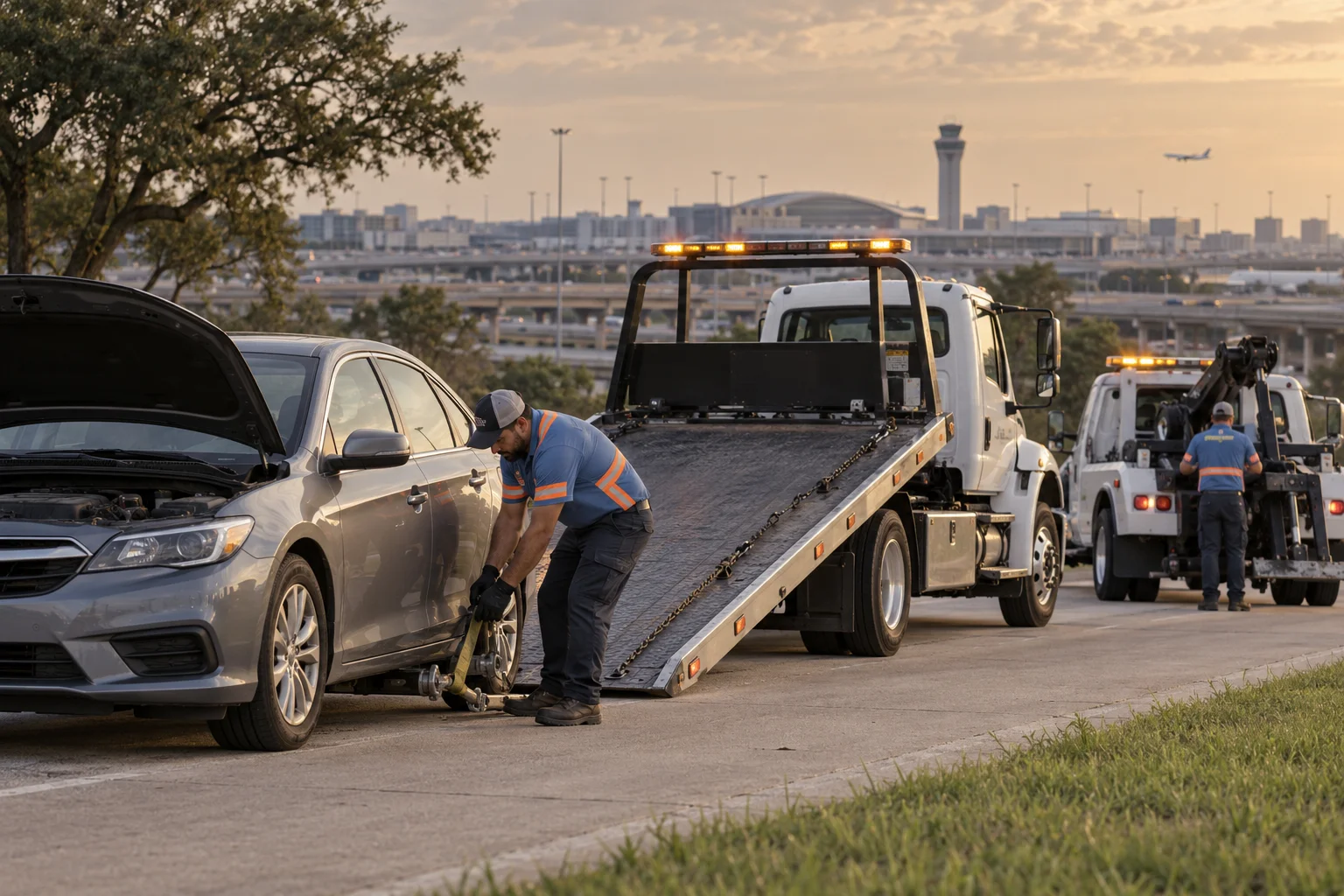
Send a precise location before anything else
Open your phone’s map and share the dropped pin. Then send the written address or coordinates shown beside it. A pin helps, but a short description confirms what the map means.
Include these details:
- The road or parking facility name shown on your map
- Your direction of travel, if you’re on a roadway
- The terminal, garage, lot, hotel, or business nearest you
- The level, row, zone, or door number, if one is posted
- Whether you’re before or after an entrance, exit, or intersection
- Your vehicle’s color, make, model, and visible condition
- Whether the vehicle can roll, steer, and shift into neutral
Don’t rely only on a landmark you passed earlier. Airport loops and nearby access roads can make an old reference misleading. Describe what you can see from the car now. Read signs exactly instead of shortening their wording.
A screenshot also helps when your map pin moves or displays poorly. Send both the live location and screenshot when possible. If another person is with you, ask them to verify the road name.
Stay with the vehicle only when it’s safe. Don’t walk across active lanes to meet an operator. If the car is exposed to moving traffic or someone is hurt, contact emergency services first.
Quick Tow Houston handles intake and dispatch. We connect callers with licensed, insured operators in our network. For a broader call checklist, see what number to call for a tow in Houston.
Terminal roads and public roads aren’t the same
A car beside a terminal isn’t the same dispatch problem as one near the airport. The operator needs to know whether you’re on a terminal approach, inside a garage, in a parking area, at a rental facility, or on a nearby public road.
That distinction affects how the operator plans the pickup. Garage height, entry points, traffic controls, and the vehicle’s exact position may matter. We can’t confirm a universal IAH access procedure from the approved research for this page. Airport procedures can also change. Check current airport signs or guidance, then ask the operator to confirm access before the truck rolls.
If you’re at a terminal, send the terminal name and the posted level. Add the airline area or door marker only as a location reference. Don’t assume “arrivals” or “departures” gives enough detail by itself.
If you’re in a garage, provide its posted name, floor, row, and clearance information. Tell the operator if the vehicle is near a ramp, ticket gate, tight turn, or low overhead structure. Don’t guess whether a particular tow truck can enter. The operator must decide what equipment and access plan fit the location.
For a remote lot or business property, send the entrance you used. Include any gate, payment booth, or access issue. Get current instructions from the property or airport staff when required. Quick Tow Houston doesn’t control IAH access, parking operations, or traffic restrictions.
These details help distinguish a routine roadside request from an emergency towing referral that needs vehicle transport.
JFK Boulevard, Will Clayton Parkway, and Beltway 8
Three route names can quickly narrow an IAH-area breakdown: JFK Boulevard, Will Clayton Parkway, and Beltway 8. Still, the road name alone isn’t enough. Each route covers more than one possible pickup point.
If you’re on JFK Boulevard, send your direction of travel and the last intersection or entrance you passed. Note whether you’re on the main road, a ramp, a frontage road, or a terminal approach. Use the exact label displayed by your map.
For Will Clayton Parkway, share the nearest cross street, business, hotel, or airport entrance. “Near Will Clayton” can describe several very different locations. A tow truck near IAH needs a pin that identifies your side of the road and current access point.
Around Beltway 8, verify whether your map places you on a main lane, frontage road, ramp, shoulder, or nearby property. Don’t describe every road beside the Beltway as “Beltway 8.” The operator may approach differently based on the map pin and legal access.
A useful location message could read:
Disabled silver sedan. Map pin attached. I’m on the frontage road near the JFK Boulevard connection, beside the right shoulder. The car won’t restart but can steer.
Only include details you can confirm. If the map and road sign disagree, send photos of both and tell the operator there’s a mismatch.
Houston’s Tow and Go program may provide limited assistance for an attended disabled vehicle on an eligible freeway. It excludes tollways and the Katy Freeway HOT lanes. The official program page should be checked for current eligibility and instructions.
Choose roadside help or vehicle transport
The car’s condition determines whether you need roadside help or a tow. Explain what happened without diagnosing a problem you can’t confirm.
A dead battery may call for a jump start. A flat tire may be handled where the car sits if there’s a working spare and the location is safe for the operator. A lockout or an empty fuel tank may also fit roadside assistance.
Vehicle transport is the better request when the car can’t be made drivable at the scene. It may also be needed after a collision, when a wheel is damaged, when the vehicle won’t shift, or when warning signs make continued driving unsafe. Tell dispatch what you observed. Let the operator decide how to move the vehicle.
Share these facts during intake:
- Whether the engine starts
- Whether the vehicle can roll and steer
- Whether a tire or wheel is visibly damaged
- Whether fluids are leaking
- Whether airbags deployed
- Whether the car is in a garage or tight space
- Whether it’s an electric vehicle, motorcycle, truck, or trailer
Don’t attempt a roadside repair that puts you in active traffic. Don’t try to push or winch the vehicle from a dangerous position yourself.
If you’re uncertain which service fits, read roadside assistance or tow truck in Houston. Give dispatch the symptoms and location. We’ll route the request to an operator who can discuss the available service.
Texas requires tow operators to hold a TDLR license. You can check a license through the Texas Department of Licensing and Regulation.
Confirm access and destination with the operator
Before dispatch, confirm that the operator has your pin and written location. Ask them to repeat the road, terminal, garage, lot, or business name. Correct any mismatch before the trip begins.
Next, discuss access. Tell the operator about gates, garage clearance, ticketed entry, construction, blocked lanes, or property controls you can see. If airport staff gave you instructions, pass them along exactly. Don’t assume those instructions apply elsewhere on airport property.
The approved research doesn’t confirm one permanent rule covering every terminal road, garage, and airport-area property. Check current IAH guidance for the place where you’re stranded. The operator must also confirm that the truck can legally and physically reach your vehicle.
Choose a destination before pickup when possible. It might be a repair shop, dealership, tire shop, home, or another lawful location. Confirm that the destination can receive the vehicle. Don’t assume a closed business allows unattended drop-offs.
Ask the operator to explain the price before dispatch. Quick Tow Houston doesn’t set the operator’s rate, and we don’t publish a brand price. The customer contracts directly with the operator performing the work. Confirm the total pricing method, destination, payment terms, and any possible access charge with that operator.
Also request an arrival estimate directly from the operator. Conditions around IAH, the pickup location, and truck availability can affect timing. Quick Tow Houston doesn’t promise a response window.
Keep your phone available after dispatch. If airport staff move you or the vehicle, send the updated pin immediately. A small location change can alter the correct entrance or pickup plan.
When to call us
Call when a breakdown near IAH needs roadside help or transport from a licensed towing operator. Have your map pin, road details, vehicle condition, and destination ready. Call us at (281) 916-1288 and we’ll connect you with an operator who handles this work.