A search for cheap towing near me should lead to a careful comparison. Give each operator the same vehicle, pickup, destination, and service details. Then ask what could affect the total before dispatch.
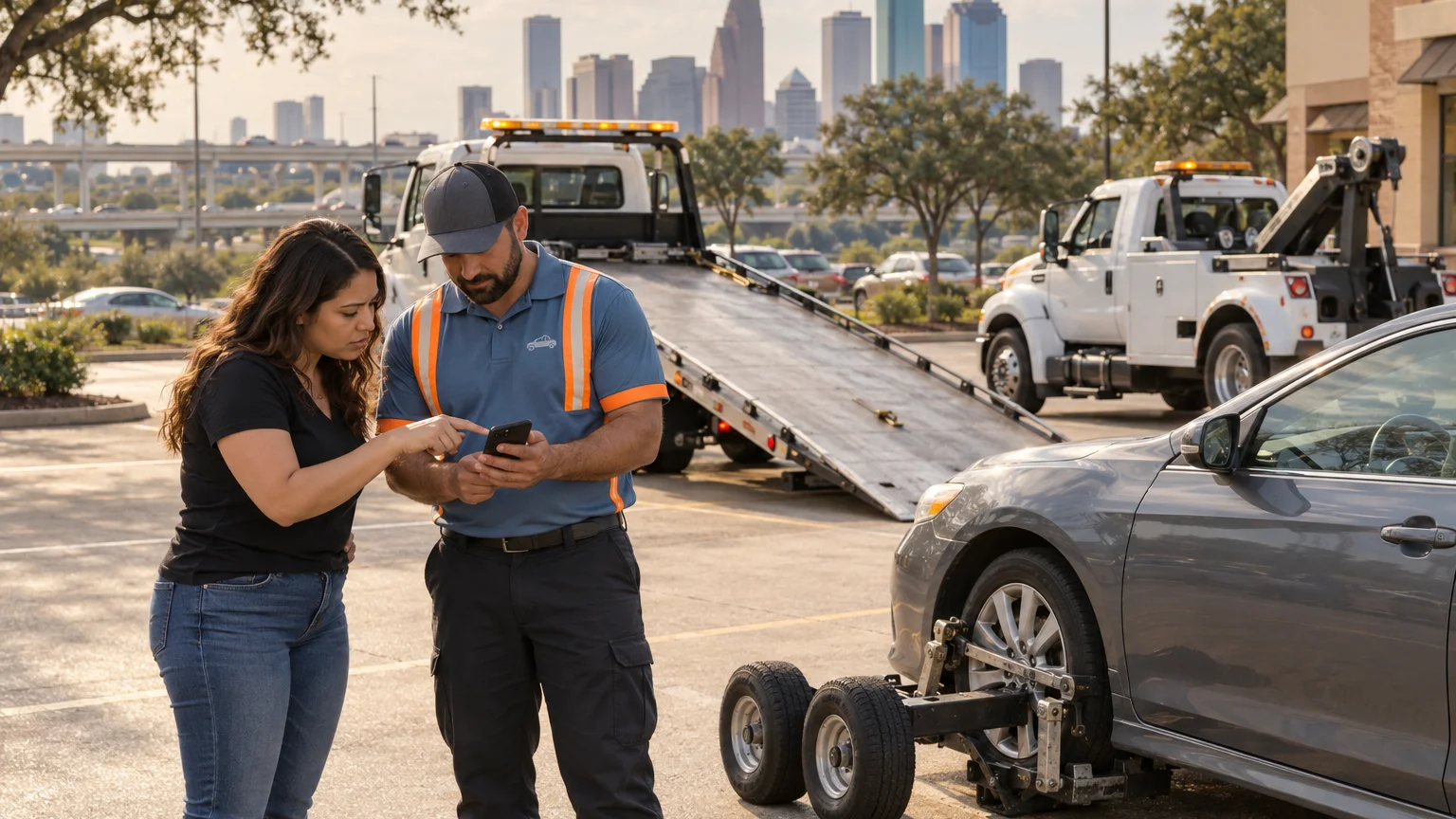
Start with the vehicle, location, and destination
Begin with the year, make, model, and condition of the vehicle. Mention whether it starts, rolls, steers, and shifts into neutral. Tell the operator if a wheel is damaged or the keys are missing. These details help identify the service needed.
Your exact location matters across Houston. A parking garage near IAH isn’t the same pickup as an open shopping center lot. Garage clearance, gate access, and the vehicle’s parking position can change the equipment needed. Share the terminal, garage level, or nearby entrance when possible.
Along the Energy Corridor, give the operator your side of I-10. Include the nearest cross street or exit. A pin alone can place you across the freeway or behind an office complex. On the Gulf Freeway, say whether you’re on the main lanes, frontage road, or a nearby lot.
Describe the destination just as carefully. Provide the repair shop, dealership, home, or storage location. Confirm that someone can receive the vehicle. If you’re comparing long-distance towing, ask how the operator measures the trip and what happens if the destination changes.
Distance isn’t the only useful detail. A locked parking structure near IAH differs from an accessible driveway in Spring Branch. A disabled sedan in the Energy Corridor differs from a loaded work truck near the Ship Channel. Comparable information produces a more useful comparison between operators.
Questions to ask the operator about the total charge
When you call a cheap tow truck near me, ask the operator to explain the possible charge. Quick Tow Houston doesn’t set that price. We dispatch and refer callers to licensed, insured operators, and the customer contracts directly with the operator.
Start with one direct request: “Please explain what may affect the total for this tow.” Then cover the facts that could change the job:
- Does the amount discussed cover the stated pickup and destination?
- Could mileage affect the charge?
- Does the vehicle’s weight or condition change the required equipment?
- Could garage access, a blocked wheel, or missing keys affect the service?
- Is recovery work needed before the vehicle can be loaded?
- What payment methods does the operator accept?
- When and how is payment collected?
Don’t treat every roadside problem as a standard tow. A car stuck against a curb may require different work. So may a vehicle off the pavement near a drainage ditch. Describe the position and send photos if the operator requests them.
If the vehicle is disabled beside a Houston freeway, explain whether it’s safely off the travel lanes. Our emergency towing referral service can connect you with an operator who handles roadside towing. Ask that operator for an arrival estimate, since Quick Tow Houston can’t control availability or traffic.
For a broader discussion of common cost factors, read our Houston tow cost guide. Use it to prepare questions, not to predict one operator’s charge.
Consent towing and non-consent towing aren’t the same
A tow you request is different from one ordered without your consent. That difference matters when you compare an operator’s price with a government-published limit.
A consent tow usually begins when you choose the pickup and destination. Common examples include a breakdown near IAH, a dead vehicle in the Energy Corridor, or a shop transfer across Houston. The operator sets the price for that requested service. Confirm the vehicle, route, service, and possible charges directly with that operator before dispatch.
A non-consent tow happens without the vehicle owner choosing the service. It may follow a police-directed removal or a private-property tow. Government rules and published maximums may apply, depending on where and why the vehicle was removed.
Don’t use a non-consent maximum as an advertised rate for a tow you request. It isn’t a Quick Tow Houston price. It also doesn’t establish what a particular operator will charge for consent towing.
If your parked car has already disappeared, searching for affordable towing near me won’t locate it. Houston has no single city-operated impound lot. Use findmytowedcar.com to search City of Houston tows by plate or VIN. The vehicle will be held at the licensed private Vehicle Storage Facility that received it.
The practical first step is identifying the tow type. Ask who authorized the removal and where the vehicle went. If you requested the tow, compare operator terms. If you didn’t, check the applicable rules and records before assuming the charge is negotiable.
When government fee caps may apply
Published government limits concern non-consent towing. They aren’t Quick Tow Houston rates, and they shouldn’t be presented as consent-tow quotes.
Inside the City of Houston, the municipal light-duty non-consent rate is $232 for the first 20 miles, then $4.64 per mile beyond 20. That rate took effect January 1, 2026, under Houston Municipal Code Section 8-123. The city adjusts the rate each January using its stated formula.
Texas also publishes statewide non-consent maximums. The TDLR towing consumer information lists these caps:
- $272 for vehicles weighing 10,000 pounds or less
- $380 for vehicles weighing 10,001 through 24,999 pounds
- $489 per unit, with a $978 maximum, for vehicles weighing 25,000 pounds or more
TDLR also lists drop-fee maximums for a vehicle hooked but not removed. Those are $135, $190, and $244 for the same weight groups. Its approved notification fee is $50. These statewide figures took effect January 1, 2024, under 16 TAC Chapter 85.
Which authority applies depends on the tow’s location and circumstances. A removal inside Houston city limits isn’t automatically governed like one elsewhere in the metro. Pasadena, the Ship Channel area, and unincorporated Harris County can involve different jurisdictions.
Our guide to regulated Texas towing fees explains that distinction further. If a specific rule or figure isn’t confirmed there or by the applicable authority, ask the operator and verify it with TDLR or the local jurisdiction.
Confirm the service and price before dispatch
Before dispatch, repeat the full job in one short summary. Include the vehicle, exact pickup point, destination, and current condition. Then ask the operator to explain what service will be provided and what could change the amount discussed.
For example, a useful summary might say: “The sedan is on an I-10 frontage road near the Energy Corridor. It won’t start, but it rolls and steers. The destination is a repair shop at the address I provided.” That gives the operator clearer information than “I need a cheap tow.”
Near IAH, mention parking deck clearance and terminal access. Around the Ship Channel, identify the correct facility entrance and whether the vehicle is loaded. Along the Gulf Freeway, specify northbound or southbound, then distinguish the frontage road from the main lanes.
Make sure the destination can accept the vehicle. A closed gate or unavailable recipient could change the plan. If the destination is uncertain, say so before the operator leaves for the pickup.
Houston freeway drivers should also know about Tow and Go. The program can move an attended, disabled vehicle from an eligible freeway to a safe location off the freeway, up to about one mile, at no cost to the driver. It excludes tollways and the Katy Freeway HOT lanes. Law enforcement or Houston TranStar must authorize the tow. A requested tow to a home or another destination is subject to the City’s non-consent rate.
Keep the final comparison simple. Match the same job details across operators. Clarify possible changes. Confirm directly with the selected operator before dispatch.
When to call us
Call when your vehicle needs a licensed towing operator and you’ve gathered the pickup, destination, and condition details. Quick Tow Houston will refer your request, while the operator confirms the service and sets the price.
Call us at (281) 916-1288 and we’ll connect you with an operator who handles this work.