Your car is secure, and now you’re wondering whether to tip the operator. No verified Houston or Texas rule requires a tip for a tow truck driver. Treat it as a personal thank-you, not part of the towing charge.
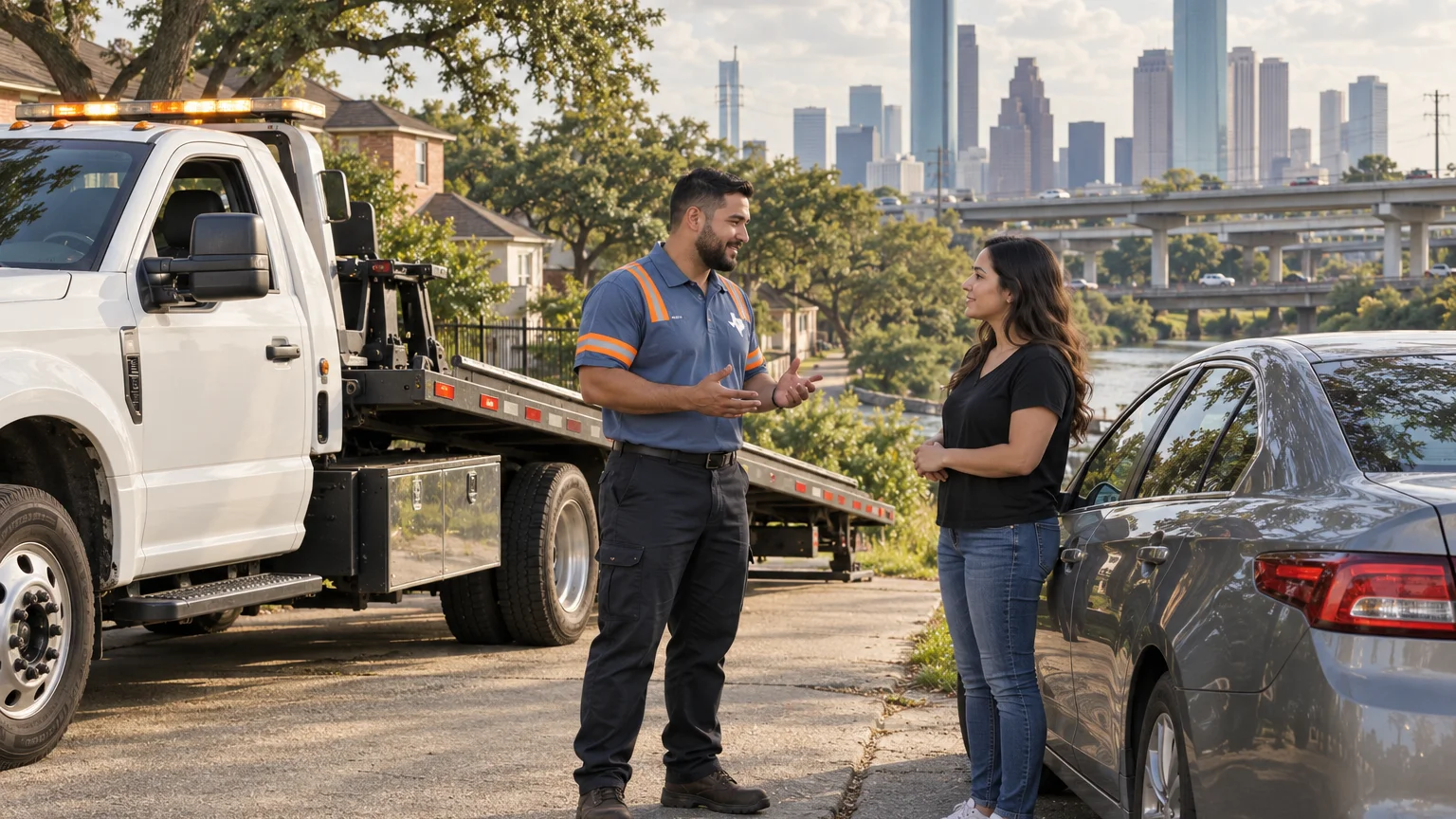
Tipping isn’t the towing charge
A tip and the towing bill are separate. The operator sets the service price and explains how payment works. Quick Tow Houston doesn’t add a tip, collect one, or set the operator’s payment policy.
We couldn’t confirm a Houston or Texas law requiring customers to tip towing operators. The TDLR towing consumer information covers regulated towing matters, but it doesn’t establish a customary tip. That means there’s no verified percentage or dollar amount we can recommend.
Don’t let a suggested amount make you feel obligated. Ask whether the operator accepts tips, then decide based on your budget and experience. A clear verbal thank-you is also appropriate.
Keep the tip separate when reviewing the bill. That distinction matters when insurance, roadside coverage, or another party handles the tow itself. It also helps you understand what the operator charged for service.
Houston towing situations vary widely. A pickup from a Gulfton parking lot isn’t the same as a disabled vehicle along I-45. A recovery near the Ship Channel may also involve different equipment than a standard passenger-car tow. Those differences can affect the service charge, but they don’t create a verified tipping requirement.
For more context on service charges, read our guide to tow costs in Houston. Confirm the actual price and payment terms directly with the operator.
Ask the operator how payment is handled
Ask about payment before the truck rolls, when circumstances allow. The operator controls the rate, accepted payment methods, and tipping policy. Quick Tow Houston can relay your service request, but we don’t make those decisions.
Use plain questions:
- What’s the quoted service price?
- What work does that price cover?
- Which payment methods do you accept?
- Is payment made to the operator or another company?
- Can your payment system accept a separate tip?
- Will I receive a receipt?
Ask again before approving added work. A simple tow can change if the vehicle needs recovery, special loading, or a different destination. Don’t assume extra work is included. Let the operator explain what changed and whether it affects payment.
The setting matters, too. A roadside call near the Energy Corridor may involve different access than a garage pickup in Downtown Houston. Along SH 225 near Pasadena, traffic and vehicle position may shape how the operator approaches the job. None of that creates a standard tip.
If you called through insurance or a roadside program, ask what the program covers. Don’t assume a tip can be added to that payment. The operator can tell you what their system permits.
Drivers comparing nearby options can also review our guide to finding a tow truck near you in Houston. It explains what information helps with dispatch without promising an arrival time.
Ways to show thanks without inventing a rule
You don’t need a made-up tipping formula to acknowledge careful work. If you want to offer money, ask the operator whether they can accept it. Don’t assume cash, card, or a payment app is allowed.
A direct thank-you still matters. Be specific without turning the moment into a testimonial. You can thank the operator for clear communication, careful loading, or explaining the vehicle’s destination. That keeps your appreciation tied to what you observed.
You can also make the service easier while protecting yourself:
- Share your exact location and vehicle details.
- Mention garage clearance, locked wheels, or collision damage.
- Keep keys and requested documents ready.
- Confirm the destination before the vehicle leaves.
- Remove permitted personal items before pickup when practical.
Houston location details can prevent confusion. “I’m on I-10” covers a long corridor. Give the direction of travel, nearest exit, and a visible landmark. In Pasadena, Baytown, or Channelview, include the correct city or jurisdiction instead of writing only “Houston.”
Weather can also make a roadside scene uncomfortable. Heavy rain, heat, or standing water may affect the situation. You can ask the operator when and how to offer a tip.
Most importantly, don’t stretch your budget because an article supplied an arbitrary number. No verified local requirement supports one. A tip remains your decision after you understand the service and payment arrangement.
Receipts, records, and questions about the service
Get a receipt for the towing payment, whether you tip or not. Ask the operator to identify the service performed, destination, and payment method. If the system records a tip separately, check that entry before you leave.
Keep the dispatch details and receipt together. Photograph the vehicle before loading when it’s safe. Record the pickup and destination in your own notes. These steps help if you later need to speak with an insurer, roadside program, repair shop, or operator.
A receipt also prevents the tip from being confused with the tow charge. If you paid a voluntary amount, ask whether it appears separately. Don’t alter the receipt yourself. Request clarification from the operator if an entry is unclear.
For a consent tow that you requested, payment questions should go directly to the operator. For a non-consent tow, different rules may apply. TDLR licenses Texas towing operators, and you can use its license search if you need to verify an operator.
If your vehicle was removed without your permission, tipping isn’t the immediate issue. First identify the facility holding it and review the charges. Houston doesn’t use one city-operated impound lot. City tows go to licensed private vehicle storage facilities, so use the official Houston vehicle lookup to locate it.
Don’t sign a document you don’t understand. Ask what each charge represents and who issued it. If the question concerns a voluntary tip, confirm that separately from any towing or storage payment.
What Quick Tow Houston does and doesn’t handle
Quick Tow Houston is a dispatch and referral service. We answer the line, gather your location and vehicle details, then connect you with a licensed, insured towing operator. The customer contracts directly with that operator.
We don’t own tow trucks, employ the driver, or perform the tow. We also don’t operate a storage yard. The operator controls the service price, accepted payment methods, receipt process, and tipping policy.
That division is important when you have a payment question. We can help route the request and pass along relevant service details. Questions about a tip must go to the operator who performed the work.
When you call for emergency towing in Houston, provide the vehicle type, condition, location, and intended destination. Mention low clearance, collision damage, blocked wheels, or other loading concerns. Accurate details help dispatch identify an operator equipped for the request.
Houston’s road network also calls for precision. Say whether you’re inside Loop 610, along the Katy Freeway, near the Energy Corridor, or south toward the Bay Area. For an elevated freeway or frontage road, include your direction of travel and nearest exit. Provide the description from your current location.
Ask the operator for an arrival estimate and payment terms. We can’t promise when a truck will arrive, and we don’t set the operator’s price. Once service is complete, decide for yourself whether you want to offer a tip. There’s no confirmed Houston amount or legal obligation to follow.
When to call us
Call when your vehicle can’t be moved safely and you need a licensed towing operator. Call us at (281) 916-1288 and we’ll connect you with an operator who handles this work.