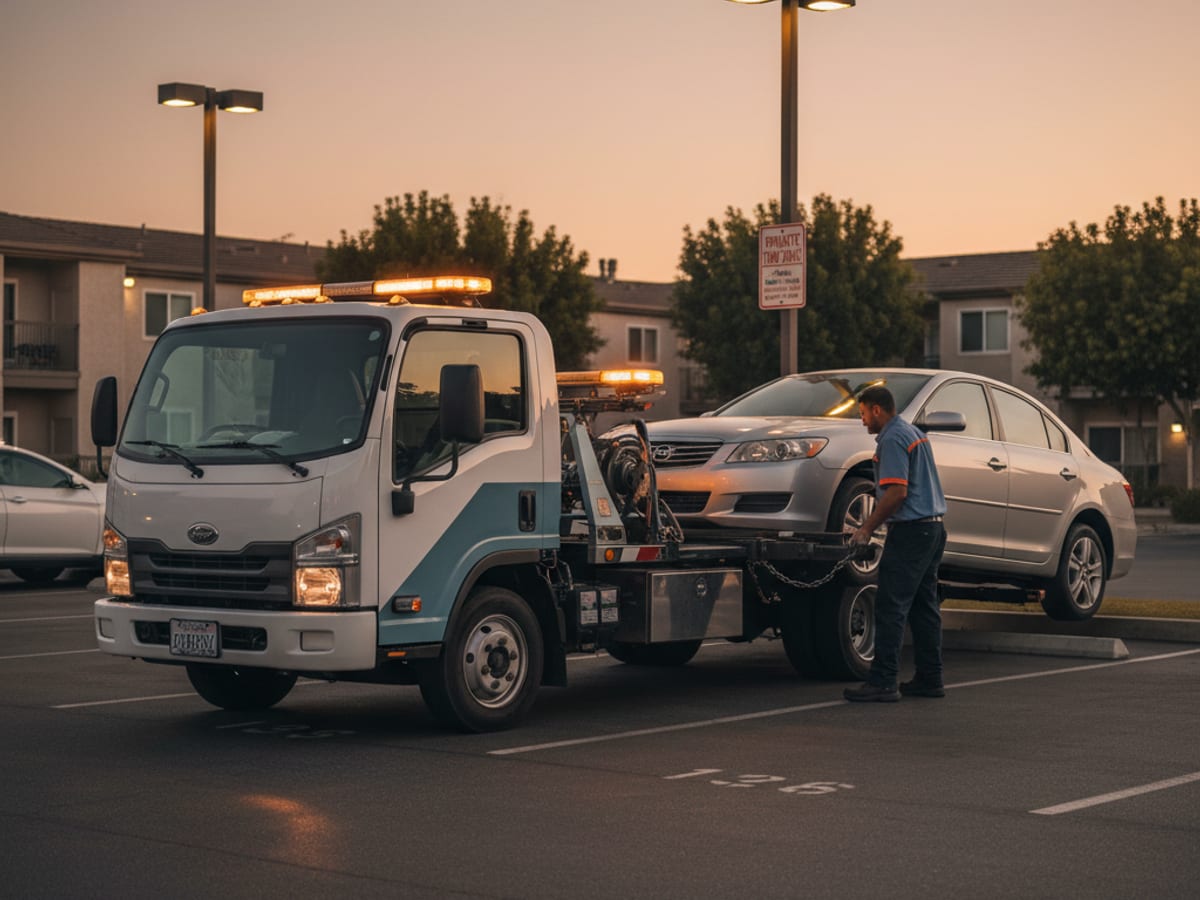
A car blocks a driveway when it prevents the lawful use of that driveway. The test is practical, not legalistic: would a reasonable person trying to enter or exit the driveway be unable to do so?
The practical test
A driveway is blocked when:
- Any part of the unauthorized vehicle crosses the property line of the driveway (curb cut, sidewalk, or driveway edge)
- The vehicle sits within the swing path needed to enter or exit the driveway
- The vehicle prevents access to a garage door, gate, or parking pad behind the driveway
- The vehicle covers the path a pedestrian would use to reach the property
The exact measurement is the property owner’s call, with the operator’s verification. A car parked even partially across the curb cut counts.
What is NOT a block
A car is generally not considered to be blocking a driveway when:
- It is parked fully on the public street, with no part crossing into the driveway
- The driveway is not in active use (no car parked inside, no scheduled guest)
- The car is on the property owner’s side of the lot, not on the street side
If the car is fully on the street and not touching the driveway, the private-property tow path does not apply. That would be a public-street obstruction (city’s job).
What the property owner has to show
For a private-property tow to hold up at a hearing:
- The driveway was in active use (you, a family member, or a guest needed access)
- The unauthorized vehicle was actually blocking the driveway
- The lot’s signs were compliant with §2308.301
If you as the property owner cannot show the driveway was in active use, the hearing officer may dismiss the tow.
What about a partial block
A car that sits even partially in the driveway counts. The operator typically uses the photo of the car’s tire crossing the curb cut or driveway edge as the evidence.
A car parked in front of a closed garage (the garage is not in use, the owner is away for months) is a closer call. Most operators will not tow without a clear in-use driveway. If the tow goes to a hearing, the property owner has to show actual use.
What about emergency access
If a car blocks emergency vehicle access to the property (fire trucks, ambulances), the situation is more serious. Contact HFD non-emergency at (713) 884-3131 for guidance. The fire department can coordinate a tow through a different path (city-initiated rather than private-property).
What about a public street
If a car is parked on the public street in front of your driveway, fully on the street, and not crossing into the driveway, the private-property tow path does not apply. The car’s location is on the street, even if it visually blocks the driveway from the street side. That is a city obstruction. Contact 311 or HPD non-emergency.
If the car crosses the curb cut or sits partially in the driveway, the private-property tow path applies to the part that crosses. The operator typically waits until the car is clearly in the driveway.
What about a sidewalk
Sidewalks are public. A car parked on the sidewalk in front of your driveway is a city problem (311 or HPD non-emergency). The private-property tow path does not apply.
If the car is parked on the sidewalk and partially in the driveway, the operator handles the driveway portion. The sidewalk portion is the city’s problem.
What about a shared driveway
If you share a driveway with a neighbor (a common setup in older Houston neighborhoods), the test is the same: the car blocks either user’s access. The property owner or both owners can authorize a private-property tow if the signs are compliant. Coordination matters more than in a single-owner situation.
For more on what to do when a car blocks your driveway, see our driveway blocking guide. For the property owner procedure, see our property owner guide.
If you need a tow operator now, call Quick Tow Houston at (281) 916-1288.
Frequently asked questions
What is the legal definition of blocking a driveway in Houston? There is no single statutory line. The test is practical: would a reasonable person be unable to enter or exit the driveway?
Does a car parked partially in the driveway count? Yes. Any part of the car crossing into the driveway counts as a block.
What if the car is fully on the street? That is a public-street obstruction (city’s job), not a private-property tow situation.
What if no one is using the driveway right now? The property owner has to show the driveway was in active use at the time of the tow. The hearing officer may dismiss a tow where the driveway was empty.
What if the car blocks emergency access? Contact HFD non-emergency at (713) 884-3131. The fire department handles city-initiated tows differently.
What if I share the driveway with a neighbor? Either owner can authorize a private-property tow if the signs are compliant. Coordination helps.