Jump-start a dead battery safely
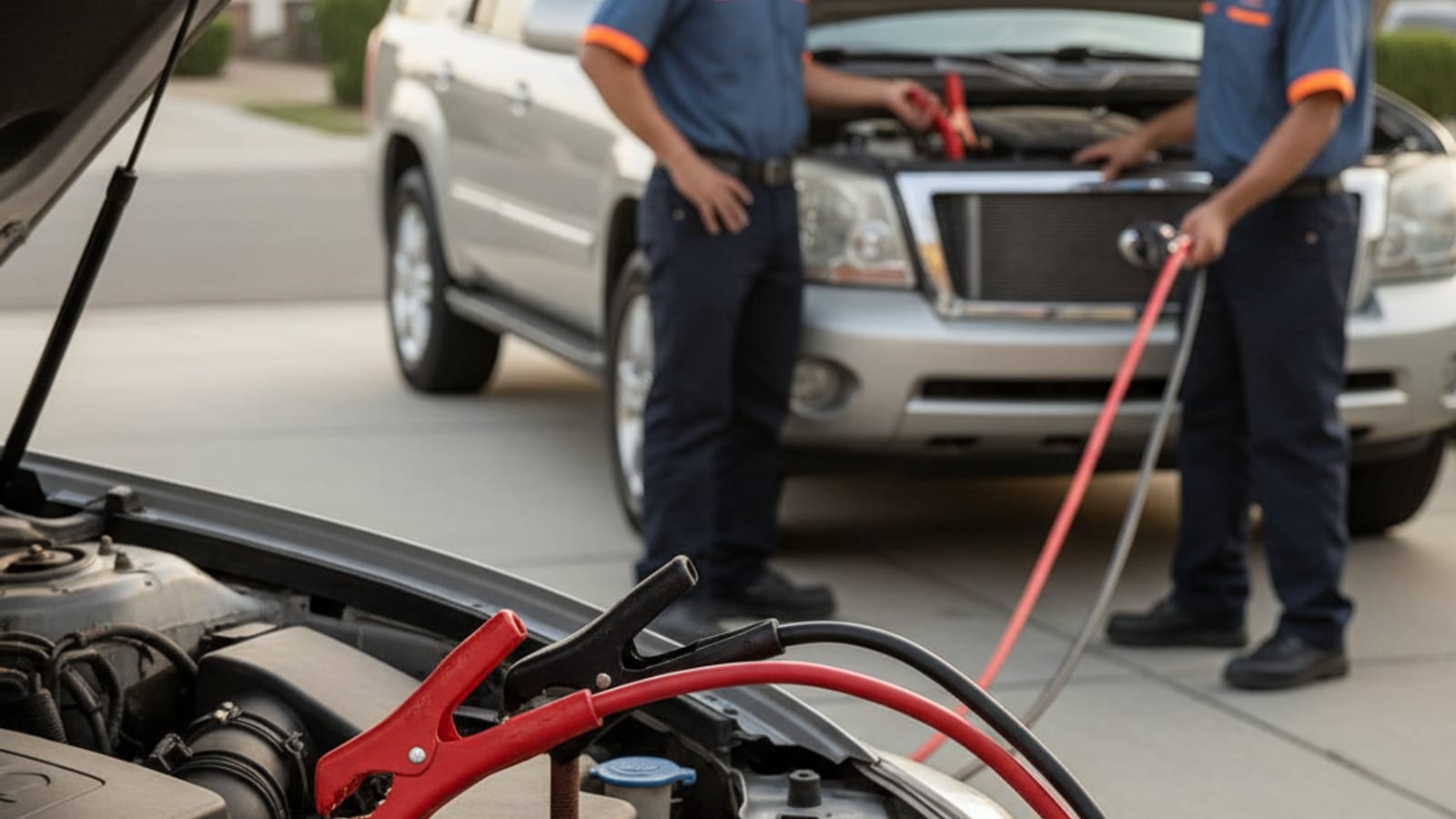
Jumper cables are simple until you hook them wrong. Do it right and you'll avoid sparks, ruined electronics, and a tow you didn't need.
What you'll learn
- The correct red-then-black clamp order (and why it matters)
- Why the last clamp goes on a bare metal point, not the dead battery
- When a jump-pack beats a cable-to-cable jump
- Signs that the alternator is bad and a jump will not fix the car
Step by step
- Pull the donor car close enough for the cables to reach. Both cars OFF.
- Clamp RED to POSITIVE (+) on the dead battery.
- Clamp RED to POSITIVE (+) on the donor battery.
- Clamp BLACK to NEGATIVE (−) on the donor battery.
- Clamp BLACK to bare metal on the dead car's engine block (not the battery).
- Start the donor. Wait 2 minutes. Start the dead car. Let run 10 minutes before driving.
If the car cranks weakly or dies again within an hour, the alternator or battery has failed. A second jump will not help - call for a tow to a shop.
Rather have a pro handle it?
around the clock towing and roadside across the Houston metro, handled by licensed local operators.
Keep learning.
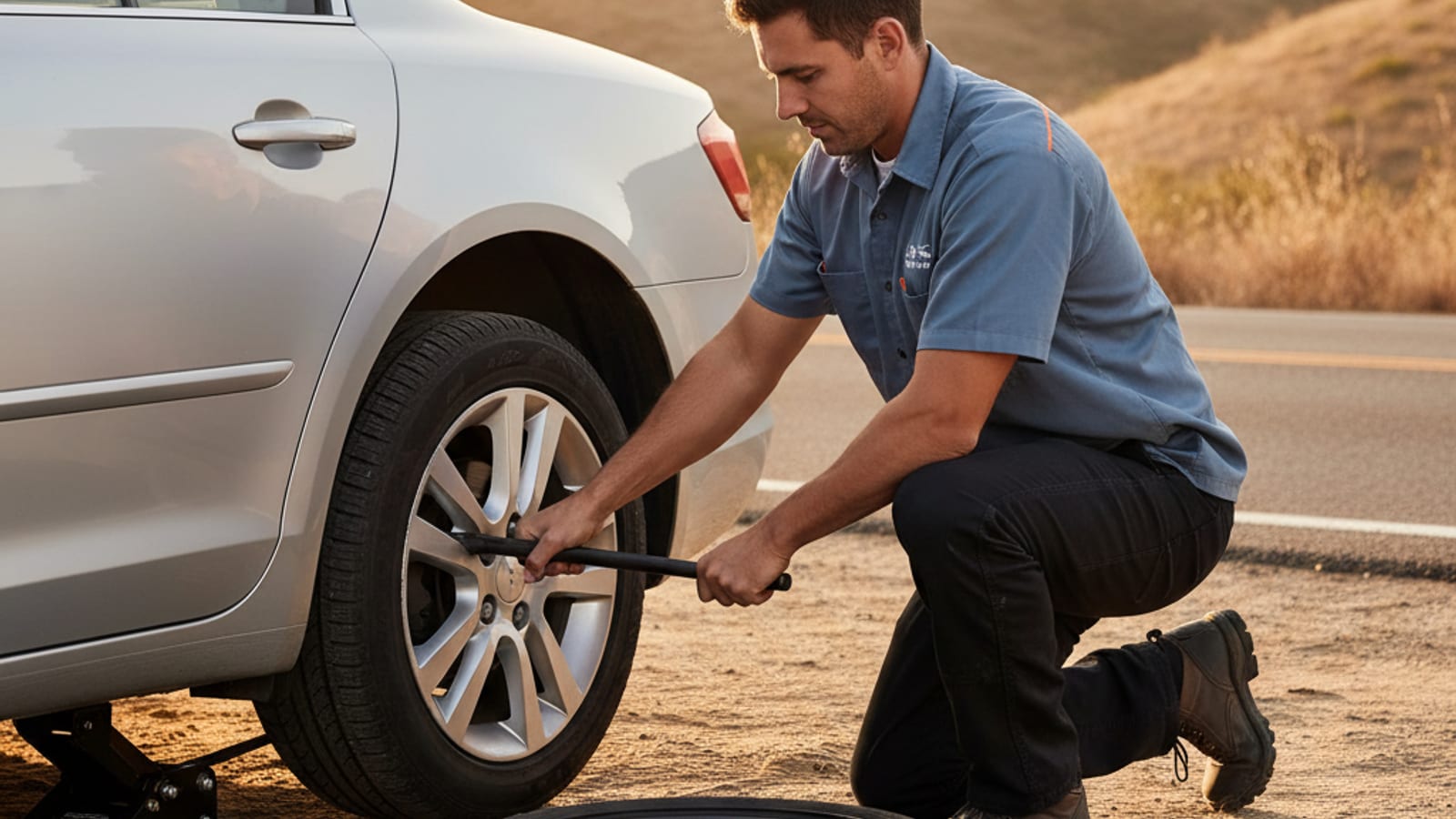
Change a flat tire on the side of the road
The difference between a 20-minute shoulder stop and an hour on the phone with a tow company is knowing where the spare and jack live before you need them.
What to do when stuck in mud or high water
Heavy rain turns low-lying streets, bayou crossings, and unpaved lots into mud and standing water fast. The first thing to do is stop making it worse.
Prepare your vehicle for a tow
A few minutes of prep before the tow truck arrives saves time, avoids damage, and makes the whole call go faster.