What to do when stuck in mud or high water
Heavy rain turns low-lying streets, bayou crossings, and unpaved lots into mud and standing water fast. The first thing to do is stop making it worse.
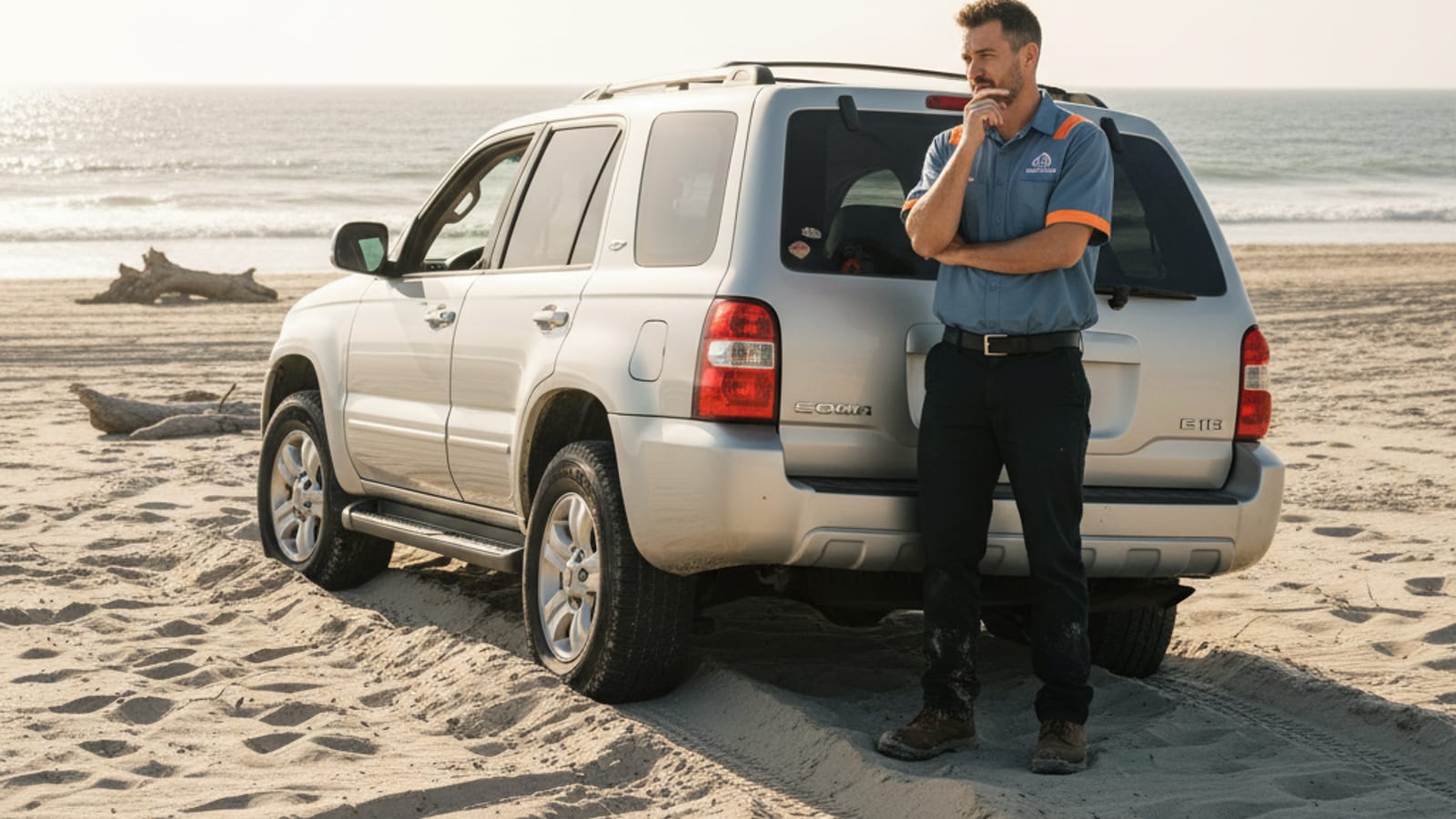
What you'll learn
- Why spinning the wheels digs you deeper - fast
- Why you should never drive into standing water of unknown depth
- How traction mats work and when to use them
- When to stop trying and call a winch-out
Step by step
- Stop spinning the wheels immediately. Every 10 seconds of spin drops you another inch.
- Check if anyone is hurt or if the vehicle is unstable (leaning, sinking, floating). Get to higher ground if so.
- Dig the mud away from the front and back of each drive wheel.
- Slide traction mats, cardboard, or floor mats under the drive wheels.
- Try to rock back-and-forth gently - reverse 6 inches, then forward 6 inches.
- If it does not move after 2 tries, or if water is rising, stop and call for a winch-out.
A winch-out costs far less than a flooded transmission or a waterlogged electrical system. We carry recovery mats and come-along rigs on the truck.
Rather have a pro handle it?
around the clock towing and roadside across the Houston metro, handled by licensed local operators.
Keep learning.
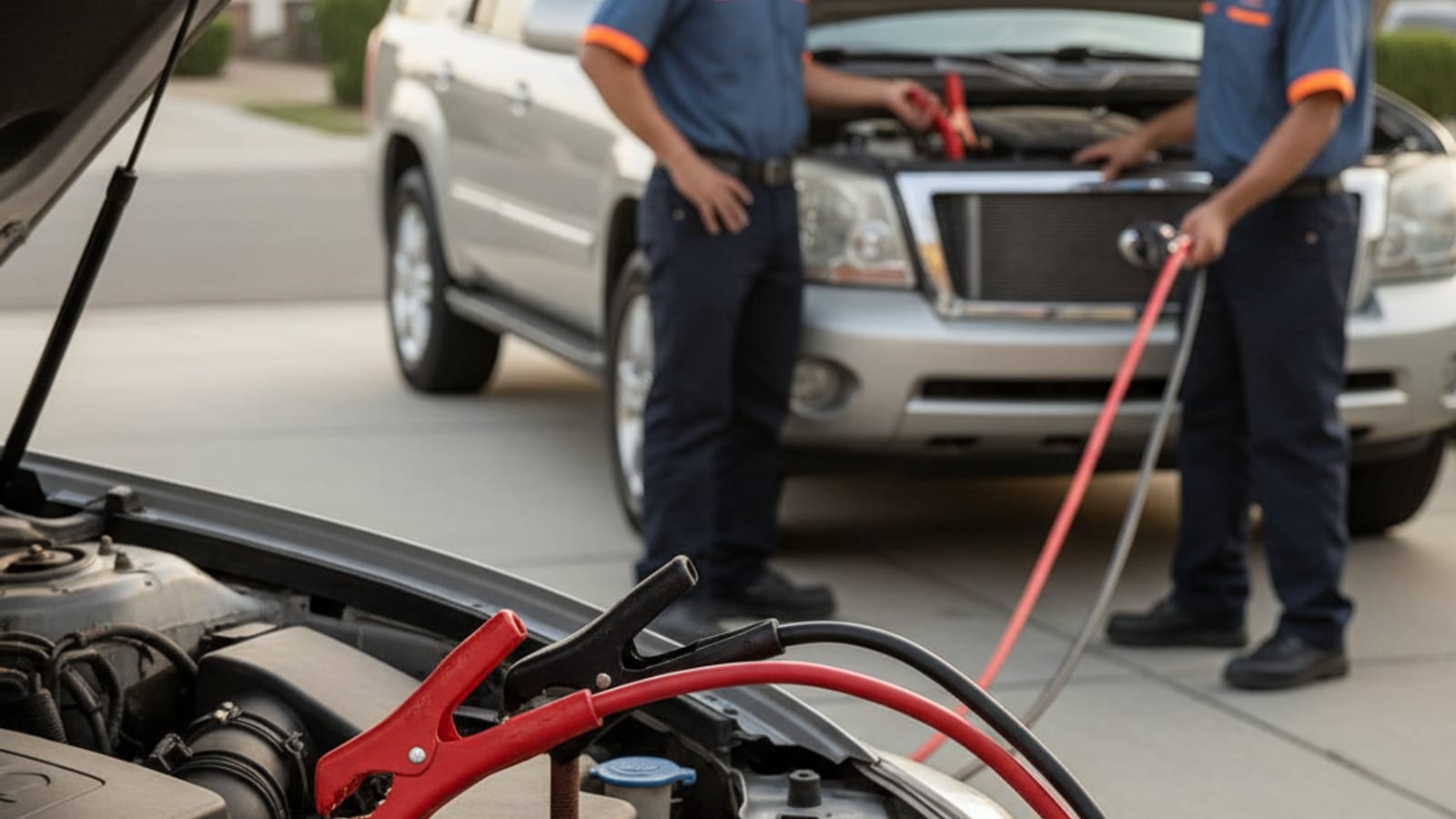
Jump-start a dead battery safely
Jumper cables are simple until you hook them wrong. Do it right and you'll avoid sparks, ruined electronics, and a tow you didn't need.
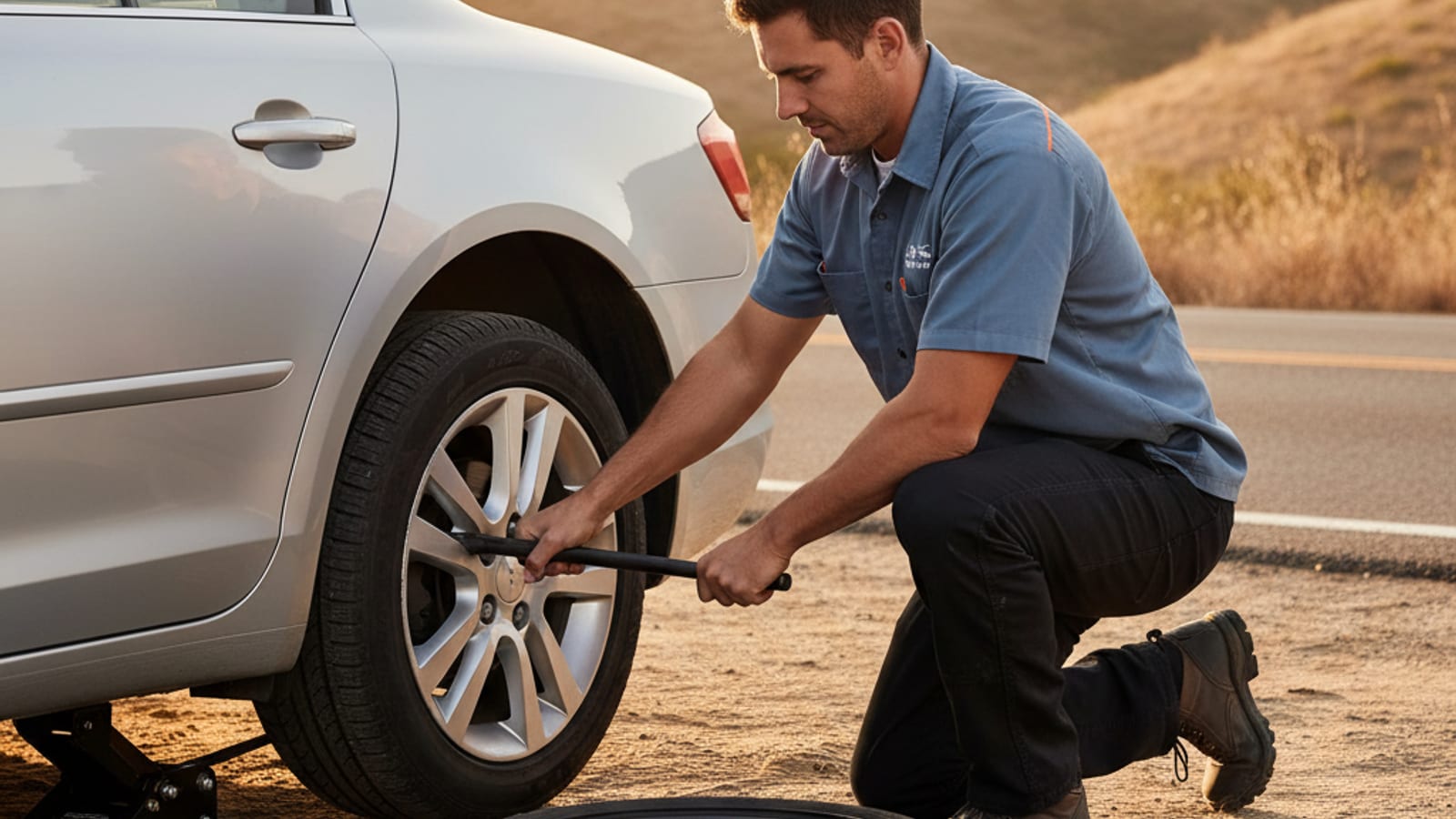
Change a flat tire on the side of the road
The difference between a 20-minute shoulder stop and an hour on the phone with a tow company is knowing where the spare and jack live before you need them.
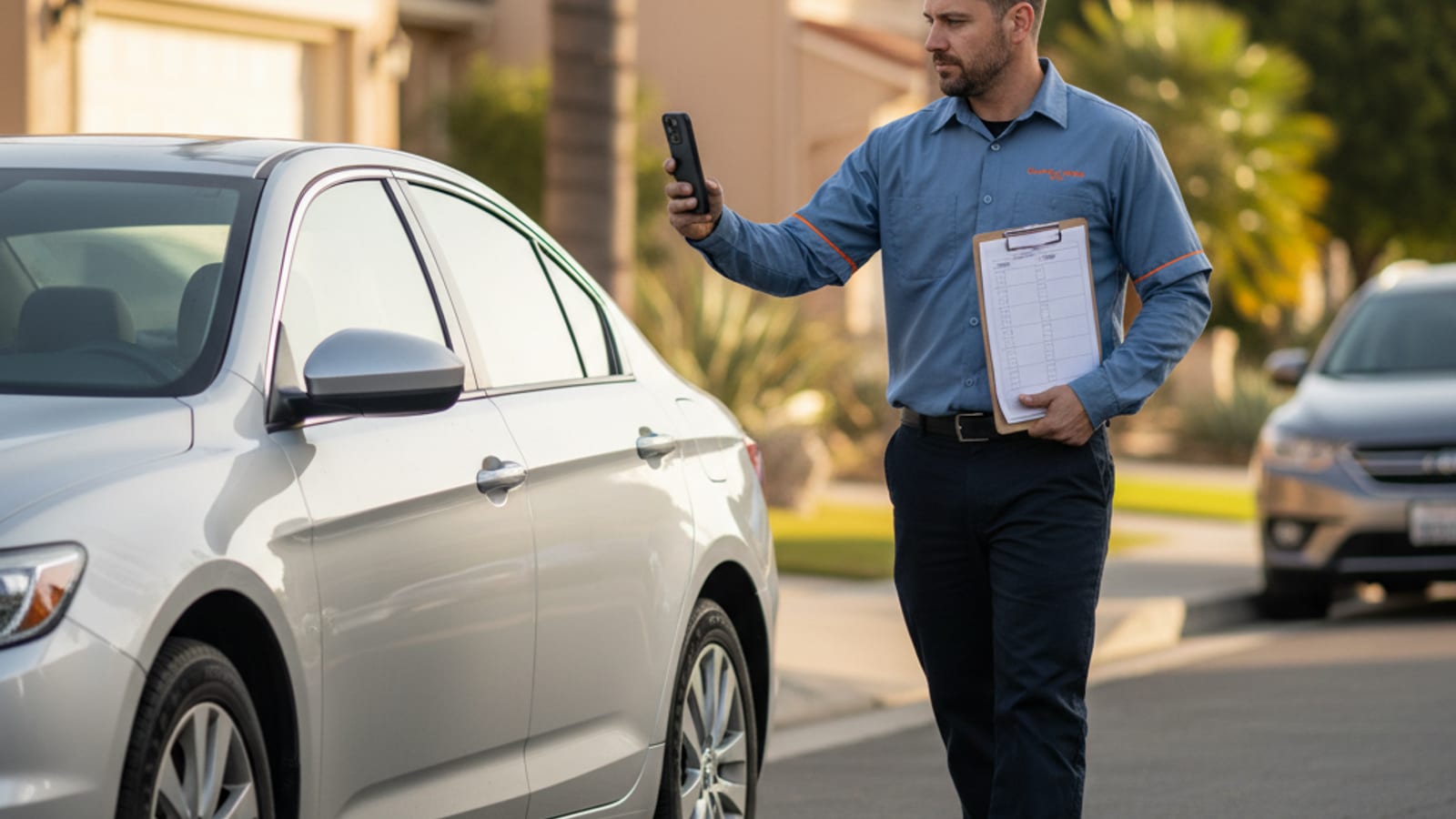
Prepare your vehicle for a tow
A few minutes of prep before the tow truck arrives saves time, avoids damage, and makes the whole call go faster.