A car with one or more wheels missing may still be movable. The operator must first review its condition, location, and surrounding access. Quick Tow Houston can connect you with a licensed, insured towing operator, but we can’t guarantee that every vehicle can be recovered.
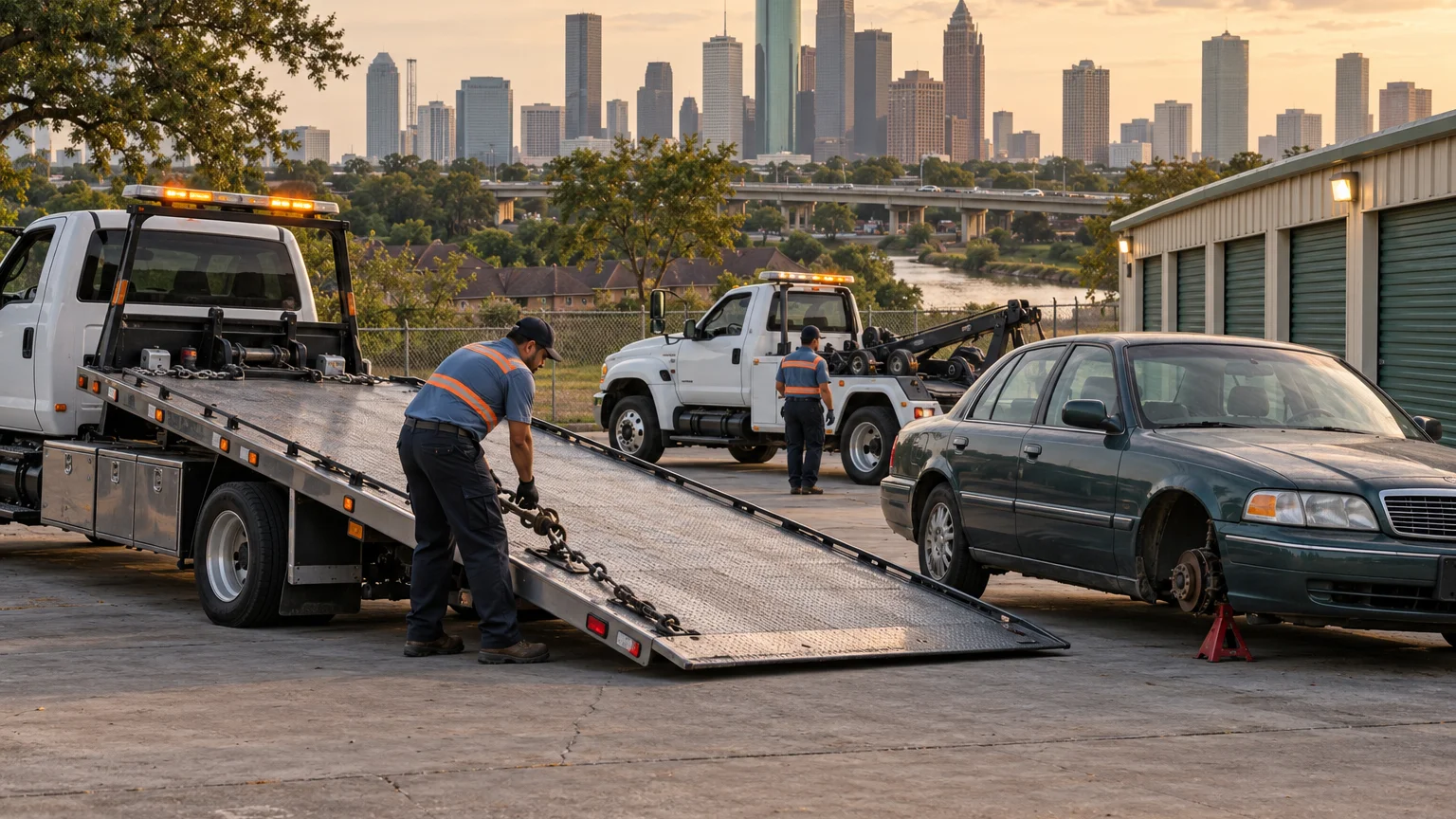
Describe exactly what’s missing or damaged
Start by explaining what “without wheels” means in your situation. One missing wheel creates a different problem from a car resting without any wheels. A wheel may also be present while the tire, suspension area, or surrounding bodywork appears damaged.
Tell the operator which corners are affected. Mention whether any loose parts are touching the pavement. If the car sits unevenly, say which side appears lower. Don’t attempt to diagnose hidden damage. Describe only what you can see from a safe position.
Clear photos can help the operator review the request. Take wide photos of the whole vehicle and closer views of each affected corner. Include the ground beneath it and nearby obstacles. Make sure the plate, vehicle make, model, and approximate condition are available during intake.
Keys are another separate detail. Tell the operator whether you have them and whether the vehicle can be unlocked. Our guide to towing a car without keys explains why that information belongs in the first call.
Don’t assume a standard tow request covers severe wheel damage. The operator needs an accurate description before accepting the job. Quick Tow Houston passes those details to the towing provider. The provider then decides whether the vehicle can be moved and what the job requires.
If the condition changes before pickup, report that change. A vehicle that shifts, settles, or loses another part may need a fresh review.
Share where the vehicle is sitting
The exact Houston location matters as much as the missing wheels. Give the street address, property name, parking level, and nearest entrance. A map pin can help when the written address points to a large complex.
Houston sites vary sharply. A disabled car beside a house in Spring Branch isn’t the same request as one inside a Gulfton parking structure. Storage properties near the East End may have controlled gates. Lots around Pasadena or the Ship Channel may have separate security procedures and designated entrances.
Tell the operator what’s directly beneath the vehicle. It could be on pavement, gravel, dirt, or another surface. Report any visible slope, curb, parking stop, drain, or debris nearby. Don’t guess whether the surface can support loading work. Let the operator evaluate the information.
For a roadside vehicle, give the road name and travel direction. Include the nearest exit, cross street, or recognizable landmark. I-45, Loop 610, Beltway 8, and the Katy Freeway cover long distances, so “on the freeway” isn’t specific enough.
Houston’s Tow and Go program covers certain attended, disabled vehicles on eligible freeways. It provides a tow to a safe location off the freeway, subject to the program’s conditions. That service doesn’t replace a separate operator review for moving a car without wheels.
If the vehicle is already behind a gate, ask the property contact how entry works. Share those instructions before dispatch, not after the operator reaches the property.
Check access around garages and storage lots
A car may be visible yet difficult to reach. Before dispatch, look at the full route from the entrance to the vehicle. Report anything that limits access, but don’t decide what equipment will fit.
In a garage, provide the posted clearance if you can read it. Mention ramps, sharp turns, columns, low pipes, speed bumps, and narrow entry lanes. Say whether the vehicle faces into or away from the driving aisle. Photos from the garage entrance and parking space can give useful context.
For a storage lot, confirm that you’re authorized to access and release the vehicle. Ask the facility which gate the operator should use. Note gate codes, check-in requirements, locked rows, and vehicles blocking the path. Don’t assume staff can move another vehicle when the operator arrives.
Residential access presents different issues. A car may sit behind a narrow driveway, inside a garage, or near a fence. Measure nothing unless the operator requests it. Instead, send photos that show the driveway, doorway, corners, and distance to the street.
Some jobs may involve winch-out and recovery service, but that service name doesn’t confirm the right approach. Missing wheels add another condition for the operator to assess. The towing provider must choose the process after reviewing the vehicle and access.
Remove ordinary personal items only when you can reach them without disturbing the vehicle. Don’t move supports, damaged pieces, or anything beneath the car. If you’re uncertain, leave the area unchanged and tell the operator what you see.
Let the operator choose the required equipment
A search for “tow car without wheels” often produces advice meant for RV towing or cars rolling on four tires. That isn’t the same problem. A vehicle missing wheels needs an individual review from the operator handling the move.
Don’t request equipment based only on an online article or photo. Vehicle condition, access, destination, and manufacturer guidance may affect the operator’s decision. Quick Tow Houston doesn’t own loading equipment and can’t select the setup for the provider.
You can still ask useful questions. Ask whether the photos are clear enough for review. Confirm that the provider understands how many wheels are missing. Mention any visible damage, locked steering, missing keys, or loose body panels. Ask whether the operator needs more information before accepting dispatch.
Our flatbed towing service page explains how to request that type of referral. The comparison of wheel-lift and flatbed towing also covers the basic distinction. Neither page can determine the correct approach for a specific damaged car. That decision remains with the operator.
Texas requires tow operators to hold the appropriate TDLR license. You can review towing consumer information through the Texas Department of Licensing and Regulation and verify a license through TDLR’s license search.
Don’t attempt a DIY tow with another car. The operator must decide whether the vehicle can be moved safely. If the first provider can’t accept the condition or access, the request may need reassessment rather than a different description.
Confirm the destination before dispatch
Choose the destination before the operator starts toward the vehicle. A repair shop, body shop, dealership, storage property, or private address may each have different receiving instructions. The towing provider needs the actual destination to review the request and set the price.
Call the receiving property first. Confirm that it will accept the vehicle in its current condition. Explain that one or more wheels are missing. Ask where the operator should enter and where the vehicle may be left. Get the name of the person who approved delivery.
Don’t assume a closed business permits an unattended drop. If no one can confirm acceptance, tell the operator. The destination may need to change before dispatch.
Houston distance also changes the practical scope of a move. A trip from the Inner Loop to the East End differs from a run toward Katy, Baytown, or the Bay Area. Give the complete destination address instead of a neighborhood name. Mention toll routes only as location context. The operator chooses the route.
The operator sets and quotes the price. Quick Tow Houston doesn’t set towing rates. Confirm the amount and what the request includes directly with the provider before the truck rolls.
Have proof of ownership or authorization available if the operator requests it. For a vehicle at a storage facility, confirm its release process with that facility. Houston doesn’t use one city-operated impound lot. If the vehicle was moved through a city tow, locate it through Find My Towed Car before arranging another transport.
Share any destination change immediately. A different address may require the operator to review the job again.
When to call us
Call when a damaged car is missing one or more wheels and needs an operator’s review. Have photos, the pickup location, access details, keys, and destination ready. Call us at (281) 916-1288 and we’ll connect you with an operator who handles this work.