A car that won’t shift into neutral may still be towable. The operator must review the vehicle, its condition, and the available access before choosing how to move it.
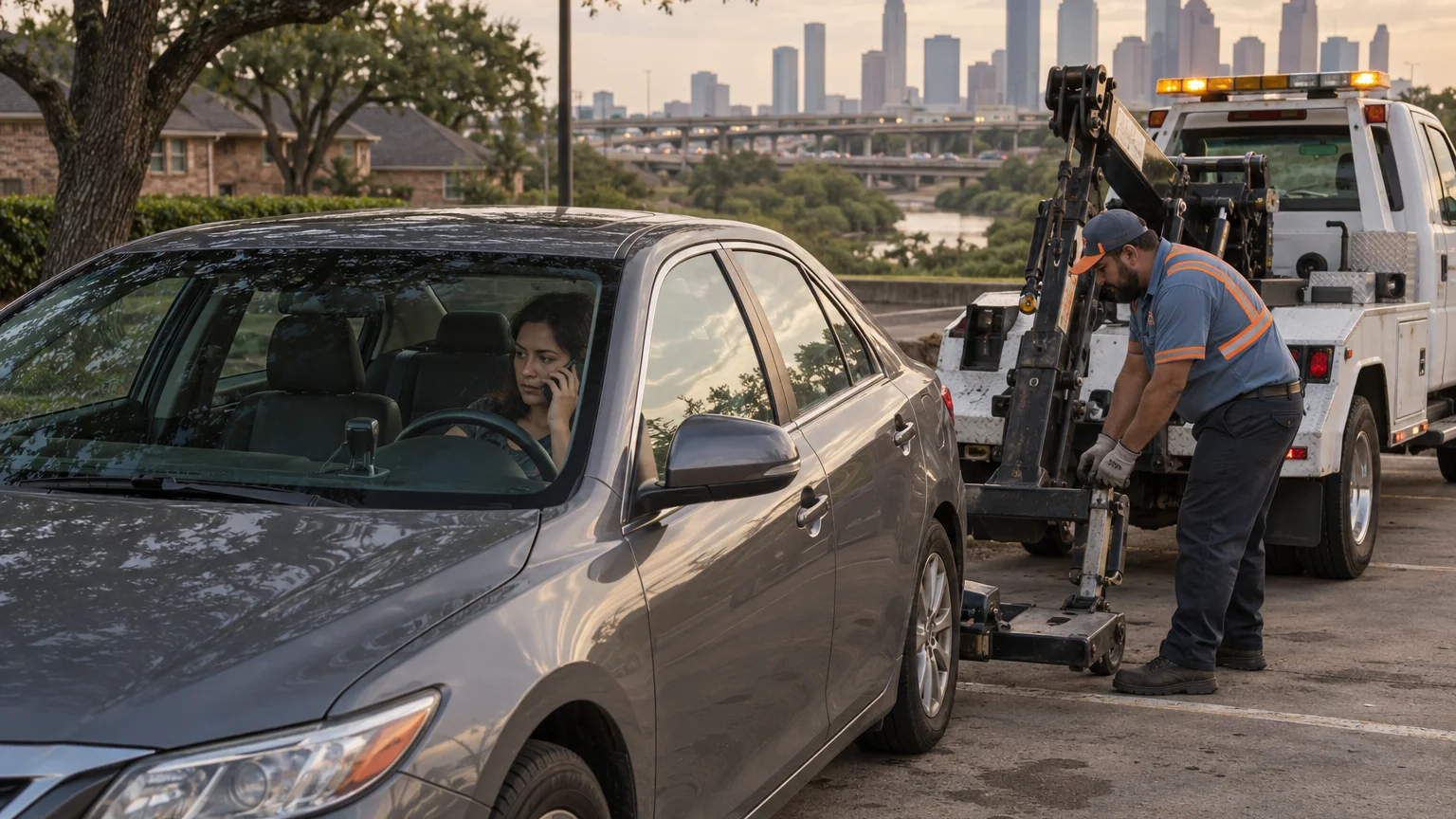
Tell dispatch whether the car can roll or steer
Start with the exact problem: “The car is stuck in park.” Don’t describe it only as a breakdown. The operator needs to know that the vehicle may not roll normally.
Tell dispatch whether any wheels turn when the car is gently pushed. Don’t keep testing if the vehicle is near traffic, on a slope, or in an unsafe position. Just report what you already know.
Steering matters separately. Say whether the steering wheel moves, feels locked, or hasn’t been tested. Also mention an engaged parking brake, damaged wheel, flat tire, or collision damage. These details can change how the operator approaches the vehicle.
A car can refuse neutral while other functions still work. Share whether the engine starts, the dashboard lights come on, and the selector responds at all. Report any message shown on the dashboard word for word. Don’t guess what that warning means.
A tow request isn’t a transmission diagnosis. The operator can assess the moving problem, but a repair shop should diagnose the cause. A stuck selector alone doesn’t give dispatch enough information to name the failed part.
Don’t force the shifter or follow a generic bypass video. Release procedures differ by vehicle. If the manufacturer provides instructions, they’ll be in the owner’s manual for that exact model. If you aren’t certain, leave the car in its current condition and explain that to dispatch.
If you also don’t have access to the keys, mention it immediately. Our guide to towing a car without keys explains the other details dispatch will need.
Share the vehicle and drivetrain details
Give dispatch the year, make, model, and body style. “A Toyota” or “an SUV” isn’t specific enough. Trim level can also matter, so share it when you know it.
Tell the operator whether the vehicle has an automatic, manual, push-button, dial, or other electronic selector. Report the drivetrain only if you know it from the vehicle or its manual. Don’t guess between front-wheel drive, rear-wheel drive, all-wheel drive, and four-wheel drive.
The vehicle identification number can help when the trim or drivetrain isn’t clear. You may find it on your registration or insurance information. Dispatch doesn’t need a mechanical theory. It needs an accurate description of the vehicle being moved.
Also explain what happened before the car became stuck. Useful details include whether it stopped running, lost electrical power, was involved in a collision, or displayed a warning. Say whether the condition began in a garage, parking space, driveway, or traffic lane.
Don’t use the “80% rule” or another general online rule to choose a towing method. Those shortcuts don’t describe your exact vehicle, its manufacturer instructions, or the access at the scene. The operator needs the real vehicle details instead.
Quick Tow Houston connects callers with licensed, insured towing operators. Texas requires tow operators to hold a TDLR license. You can check a dispatched operator through the TDLR license search and towing information.
When requesting flatbed towing, describe the stuck selector rather than assuming a flatbed settles every access issue. The operator still needs to decide what can reach and move the car.
Describe garage, curb, and roadway access
Location changes the job. A car stuck in a wide parking lot presents different access than one against a curb in Montrose. A low garage in Downtown Houston creates another set of limits.
Give the complete pickup address and identify the vehicle’s exact position. Say whether it’s nose-in, backed-in, parallel parked, blocked by another car, or close to a wall. Mention tight turns, columns, gates, ramps, speed bumps, and overhead clearance.
For an apartment garage, tell dispatch which level holds the car. Explain how operators enter and whether property staff control the gate. Don’t assume a truck can use the same entrance as a passenger car.
Curb access also deserves detail. A vehicle in the East End may sit on a narrow street with parked cars on both sides. A disabled car near the Energy Corridor may be inside a structured office garage. In Pasadena or near the Ship Channel, access may involve a controlled industrial property. Tell dispatch about security checkpoints or entry restrictions before an operator is sent.
If the car is on I-10, I-45, Loop 610, or another busy road, state the direction of travel and nearest exit. Don’t attempt a manual shift release while exposed to moving traffic.
Houston’s Tow and Go program provides a no-cost tow for an attended disabled vehicle to a safe location off an eligible freeway, up to about one mile. It excludes tollways and the Katy Freeway HOT lanes. Law enforcement or Houston TranStar must authorize that tow. A requested tow to a home or other destination falls under different terms.
Our guide to a car stuck in a Houston parking garage offers more location details to report.
Let the operator choose the transport method
Tell dispatch the symptoms, then let the operator select the approach. A car that won’t roll may require different handling from one that rolls but won’t shift. Steering, brakes, wheel condition, drivetrain, and access all affect that decision.
You can ask about wheel-lift towing or a flatbed. Don’t demand one method based only on a search result. The operator must compare the vehicle’s condition with the manufacturer’s towing instructions and the space available at pickup.
That assessment should happen before anyone tries to move the car. Tell the operator if the wheels are turned toward a curb, the parking brake remains engaged, or the steering appears locked. Mention loose body panels, collision damage, or leaking fluid without touching or identifying the substance.
Don’t try to release a shift lock with a screwdriver, pry the selector, or drag the vehicle with another car. This article can’t provide a bypass procedure because manufacturers don’t use one universal system. The correct instructions must come from the manual for the exact vehicle.
A wheel-lift versus flatbed comparison can help you understand the service names. It can’t replace the operator’s scene assessment.
Ask the operator how the vehicle will be handled in its present condition. Confirm that the operator knows it can’t enter neutral before dispatch, not after arrival. If the condition changes while you wait, call back with the update. A newly locked steering wheel, failed electrical system, or blocked entrance gives the operator information needed to reconsider the plan.
Confirm the destination before dispatch
Choose the destination before the operator starts the trip. It may be your home, a repair shop, a dealership, or another location where the vehicle can be accepted.
Call the destination yourself. Confirm that it accepts the vehicle and can receive it in its current condition. Explain that the car won’t shift into neutral. Ask where the operator should place it and whether access instructions apply.
Don’t assume a repair shop can accept an unattended vehicle. Don’t assume a dealership service entrance stays open at a particular hour. No verified receiving schedule applies to every Houston destination, so confirm it directly with that business.
Think about placement at a home as well. A narrow driveway, steep entrance, locked gate, or crowded street can create another access problem. Tell dispatch about both ends of the trip. Moving the car from an open lot into a tight residential garage may not be straightforward.
If you haven’t chosen between a dealership and an independent shop, our guide to towing to a dealership or repair shop explains what to confirm.
The operator sets the price. Ask for the operator’s quote and confirm what it covers before the truck rolls. Quick Tow Houston doesn’t set towing rates or charge for the operator’s work.
Give dispatch a working contact number and stay reachable. If security staff, property management, or a shop controls access, share the contact process. Clear pickup and destination details reduce avoidable confusion when the vehicle itself can’t be repositioned.
When to call us
Call when the car won’t enter neutral, won’t roll, or sits where access is limited. A licensed towing operator should review the vehicle and choose the transport method.
Call us at (281) 916-1288 and we’ll connect you with an operator who handles this work.